

Lightweighting is no longer a trend—it is a design imperative across automotive, aerospace, electronics, and industrial machinery sectors. Aluminum stamping parts are the primary manufacturing solution for companies that need to reduce component weight without sacrificing structural integrity. Understanding aluminum stamping parts—the alloy grades that machine best, the stamping process parameters that control springback, the surface treatments that prevent corrosion, and the design rules that optimize material utilization—enables engineers and procurement managers to specify aluminum stamping parts with confidence rather than over-engineering around uncertainty.
Why Aluminum for Stamping: Weight, Strength, and Corrosion Resistance
Aluminum weighs approximately one-third as much as steel—2,700 kg/m³ versus 7,850 kg/m³—which means aluminum stamping parts of equivalent volume are 65 percent lighter before any structural optimization is applied. Beyond weight reduction, aluminum provides excellent corrosion resistance through a naturally forming chromium-oxide surface layer that protects the base metal from atmospheric oxidation without painting or coating. For aluminum stamping parts used in outdoor enclosures, marine hardware, or food processing equipment, this inherent corrosion resistance eliminates the maintenance coating cycles required for carbon steel stamped components and reduces the lifecycle cost of the finished assembly.
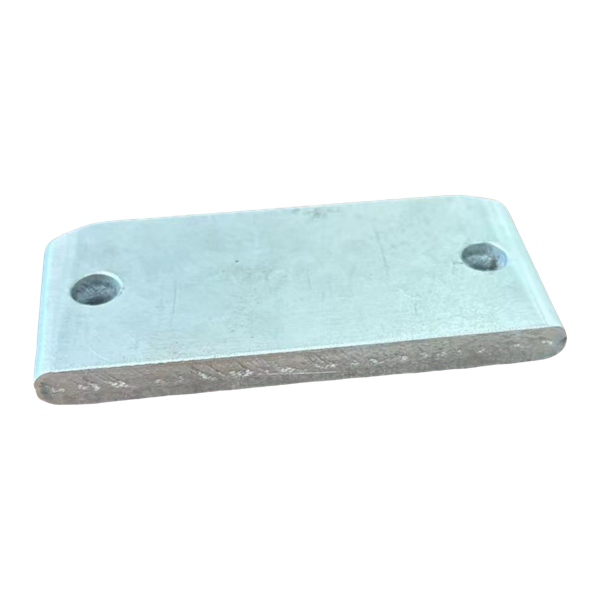
Aluminum-to-Steel Strength Comparison in Stamped Components
The yield strength of aluminum stamping parts in common alloys ranges from 55 MPa (Grade 1100-O) to 310 MPa (Grade 7075-T6), spanning a wide portion of the strength spectrum covered by structural and non-structural carbon steel stamped parts. Grade 6061-T6 aluminum—achieving 276 MPa yield strength—is the most versatile aluminum stamping parts alloy for structural applications, offering the best balance of formability, post-stamp heat treatability, and corrosion resistance. When calculating the weight savings achievable with aluminum stamping parts, designers should account for the slightly thicker sections typically required to achieve equivalent stiffness to steel due to aluminum's lower modulus of elasticity (68.9 GPa versus 200 GPa for steel). An aluminum component of equivalent bending stiffness to a steel part requires approximately 1.65 times the cross-sectional moment of inertia—but at one-third the density, the resulting aluminum aluminum stamping parts component is still approximately 45 percent lighter than the steel equivalent.
Aluminum Alloys for Stamping: Matching Grade to Application
The aluminum alloy grade selected for aluminum stamping parts governs formability, as-stamped strength, weldability, corrosion resistance, and cost. Choosing the correct alloy requires matching these material properties to the specific application requirements rather than defaulting to the most familiar grade.
5xxx and 3xxx Alloys for Non-Heat-Treatable Aluminum Stamping Parts
Aluminum alloy families 3xxx (manganese-strengthened) and 5xxx (magnesium-strengthened) are the most formable aluminum stamping parts alloys, designated as non-heat-treatable because their strength comes from solid solution strengthening rather than precipitation hardening. Grade 3003-H18 provides the highest as-stamped strength of the 3xxx series (185 MPa yield) while maintaining excellent workability for aluminum stamping parts in moderate-complexity applications. Grade 5052-H32 offers the best combination of formability and corrosion resistance in the 5xxx series, making it the default choice for aluminum stamping parts in marine environments, chemical processing enclosures, and food-grade equipment where surface quality and corrosion resistance are the primary selection criteria. The 5xxx series aluminum stamping parts alloys are not suitable for post-stamp welding applications involving arc welding processes due to the risk of magnesium oxide inclusions that degrade weld metal toughness.
6xxx Alloys for Heat-Treatable Aluminum Stamping Parts
The 6xxx aluminum alloy family—primarily 6061 and 6063—provides aluminum stamping parts with a unique manufacturing advantage: the ability to stamp in the annealed (O) temper, achieving maximum formability, then heat-treat to the T6 temper after stamping to achieve yield strengths of 260 to 310 MPa. This two-step process enables aluminum stamping parts designs that require complex geometries unachievable in the high-strength T6 temper state, followed by precipitation hardening to final strength levels that match or exceed HSLA steel in specific strength-per-weight comparisons. Grade 6061-T6 aluminum stamping parts serve structural applications in automotive chassis brackets, aerospace mounts, and industrial machinery frames. Grade 6063-T5 provides superior surface finish and excellent extrudability, making it the preferred choice for aluminum stamping parts in architectural and consumer electronics applications where appearance matters.
Aluminum Stamping Parts: 5xxx Versus 6xxx Selection Criteria
The decision between 5xxx and 6xxx aluminum alloys for aluminum stamping parts follows from three application-specific questions: Does the design require post-stamp heat treatment to achieve the target yield strength? Is the component exposed to marine or chloride-containing environments where 5xxx alloys risk sensitization? Is the component subject to welding or brazing in the final assembly? If post-stamp heat treatment is required or if the application is architectural or consumer-facing, 6xxx alloys are preferred. If the application is marine, structural, and non-welded, 5xxx alloys provide superior corrosion resistance and formability at lower cost.
Stamping Process Selection for Aluminum Stamping Parts
Aluminum stamping parts production employs the same stamping methods as steel stamping—progressive die stamping, transfer die stamping, and single-hit forming—with process parameter adjustments required to account for aluminum's lower density, higher surface reactivity, and distinct springback behavior.
Progressive Die Stamping for Aluminum Stamping Parts
Progressive die stamping for aluminum alloys achieves the highest production efficiency for complex aluminum stamping parts at annual volumes above 50,000 pieces. The draw ratios achievable with aluminum in progressive die stamping exceed those of most steels: aluminum aluminum stamping parts routinely achieve single-station draw ratios of 1.8:1 to 2.2:1, compared to 1.5:1 to 1.8:1 for equivalent-thickness steel geometries. This superior drawability enables progressive die designs with fewer draw stations, reducing the progressive die tool complexity and cost for aluminum aluminum stamping parts compared to equivalent steel parts. Aluminum stamping parts progressive die stamping typically operates at 40 to 120 strokes per minute depending on part size and draw depth, with material costs per pound approximately 20 to 40 percent higher than equivalent carbon steel stamped parts but offset by the weight savings advantage in final assemblies.
Lubrication Strategy for Aluminum Stamping Parts
Aluminum's high surface reactivity creates two distinct challenges for aluminum stamping parts production: adhesion between the aluminum surface and tool steel die components (galling), and smearing of the cut edge that degrades dimensional accuracy. Effective lubrication for aluminum stamping parts employs specialized lubricants formulated for aluminum—typically light petroleum oil with extreme pressure additives, wax-based lubricants for deep draw operations, or dry film lubricants (DADF) that bond to the aluminum surface and remain effective through multiple forming stages. Without proper lubrication, aluminum stamping parts production experiences die galling that scratches the component surface, accelerates punch and die wear, and generates surface defect rates that require 100 percent inspection and sorting—a cost that quickly erases the manufacturing efficiency advantage of the stamping process.
Surface Treatments for Aluminum Stamping Parts
Aluminum stamping parts benefit from a range of surface treatment options that enhance corrosion resistance, improve surface appearance, and provide functional surface properties unavailable from the base metal alone.
Anodizing and Powder Coating for Aluminum Stamping Parts
Anodizing—an electrolytic passivation process that grows a controlled aluminum-oxide layer on the surface—is the most common surface treatment for aluminum stamping parts in consumer electronics, architectural, and aerospace applications. Type II sulfuric acid anodizing produces 0.0003 to 0.001 inch oxide layers that accept dye coloring for cosmetic applications and provide 300 to 700 hours of salt spray resistance per ASTM B117. Type III hard anodizing (hardcoat) produces thicker oxide layers (0.001 to 0.003 inches) with surface hardness of 60 to 70 HRC, making it suitable for aluminum stamping parts in wear-critical applications including hydraulic fittings, pump components, and industrial machinery wear surfaces. Powder coating on aluminum stamping parts provides excellent adhesion, color flexibility, and corrosion protection of 1,000+ hours salt spray resistance, but requires the aluminum surface to be pretreated with chromate or chrome-free conversion coating to ensure coating adhesion and prevent filiform corrosion beneath the powder film.
Conclusion
Aluminum stamping parts are the engineering solution for industrial designs that require weight reduction without structural compromise. The selection of aluminum alloy grade—3003 or 5052 for maximum formability, 6061 for heat-treatable strength, 6063 for superior surface finish—must be driven by the specific application requirements rather than defaulting to a familiar default. The stamping process parameters, lubrication strategy, and surface treatment specification for aluminum aluminum stamping parts differ meaningfully from equivalent steel stamping operations, requiring stamping service providers with documented aluminum process experience rather than general-purpose steel stamping capabilities. Procurement engineers who specify aluminum stamping parts with this level of technical precision achieve lightweighting targets, structural performance requirements, and cost objectives simultaneously.
Frequently Asked Questions
What aluminum alloys are best for stamping structural components?
Grade 6061-T6 aluminum provides the best combination of structural strength (276 MPa yield) and post-stamp heat treatability for aluminum stamping parts requiring maximum strength. Grade 5052-H32 provides excellent corrosion resistance and formability for non-structural or moderate-strength applications.
How does the cost of aluminum stamping parts compare to steel stamping?
Material cost per pound for aluminum is approximately 2.5 to 3 times higher than carbon steel, but the 65 percent weight reduction means fewer pounds of aluminum are required for equivalent structural performance. Total assembled component cost is frequently comparable or lower when machining, fastener count, and finishing costs are included.
What surface treatments are recommended for aluminum stamping parts in marine environments?
For marine applications, aluminum stamping parts should receive Type II anodizing followed by powder coating or e-coat primer, with chromate or chrome-free conversion pretreatment to ensure coating adhesion and prevent filiform corrosion.
Can aluminum stamping parts be welded in final assembly?
Yes. 6061-T6 aluminum stamping parts are weldable by MIG and TIG processes with appropriate filler alloy selection (4043 or 5356 filler wire). 5052 and 6063 aluminum stamping parts weld more readily but achieve lower as-welded joint strengths due to the HAZ softening effect.
References
1. ASM Handbook Volume 2: "Properties and Selection: Nonferrous Alloys and Special-Purpose Materials," ASM International, Materials Park, 1990.
2. ASTM B209-2014, "Standard Specification for Aluminum and Aluminum-Alloy Sheet and Plate," ASTM International, West Conshohocken, 2014.
3. Lange, K., "Handbook of Metal Forming," 2nd Edition, McGraw-Hill, New York, 1985.
4. ASM Handbook Volume 14B: "Sheet Metal Forming," ASM International, Materials Park, 2005.
5. ASTM D3359-17, "Standard Test Methods for Rating Adhesion by Tape Test," ASTM International, West Conshohocken, 2017.