

The electronics industry demands CNC sheet metal fabrication with a combination of precision, surface quality, and functional performance that differentiates it from general-purpose sheet metal fabrication. Electronic enclosures must provide electromagnetic interference (EMI) shielding, thermal management, ingress protection, and precise assembly features for PCB mounting—all within aesthetically acceptable form factors. As consumer electronics, industrial controls, and power electronics systems grow more compact and more thermally demanding, the engineering requirements imposed on CNC sheet metal fabrication for electronics industry applications continue to intensify.
Electronic Enclosure CNC Sheet Metal Fabrication Requirements
Electronic enclosures produced by CNC sheet metal fabrication for electronics industry applications serve three primary functions: structural protection for internal components, EMI containment to prevent radiated emissions from escaping and external interference from entering, and thermal management to dissipate heat generated by active components. The relative importance of these three functions varies by application—industrial controls prioritize structural rigidity and EMI shielding; consumer electronics prioritize aesthetics and lightweight enclosures; power electronics prioritize thermal management performance—but all three requirements must be addressed by the CNC sheet metal fabrication process regardless of the specific application priority.
Structural Design Considerations
CNC sheet metal fabrication for electronics industry enclosures requires understanding the relationship between sheet thickness, part geometry, and structural stiffness. The bending stiffness of a flat panel in CNC sheet metal fabrication scales with the cube of the panel thickness—a 2 mm panel is 8 times stiffer than a 1 mm panel of identical geometry. For electronics enclosures where PCB mounting flanges must maintain flatness within ±0.005 inches to enable reliable connector mating, CNC sheet metal fabrication specifications must account for the spring-in and spring-out effects of bending, the distortion from welding assemblies, and the vibration-induced fatigue in portable device enclosures.
EMI Shielding Performance in CNC Sheet Metal Fabrication
EMI shielding effectiveness in CNC sheet metal fabrication for electronics industry applications depends on material conductivity, permeability, and the integrity of electrical continuity across all panel joints. Aluminum enclosures provide approximately 60 to 80 dB of shielding effectiveness across the 1 GHz to 10 GHz frequency range—a sufficient level for most consumer and industrial electronics. For military and aerospace applications requiring higher shielding levels, tin-plated steel CNC sheet metal fabrication assemblies with RF-absorptive gasket seals are specified. The most common CNC sheet metal fabrication failure mode in EMI shielding is electrical discontinuity at the seam between cover and base panels: the enclosure must maintain electrical continuity through the full perimeter using gasket compression, conductive adhesive, or mechanical joining methods that preserve conductivity at the joint interface.
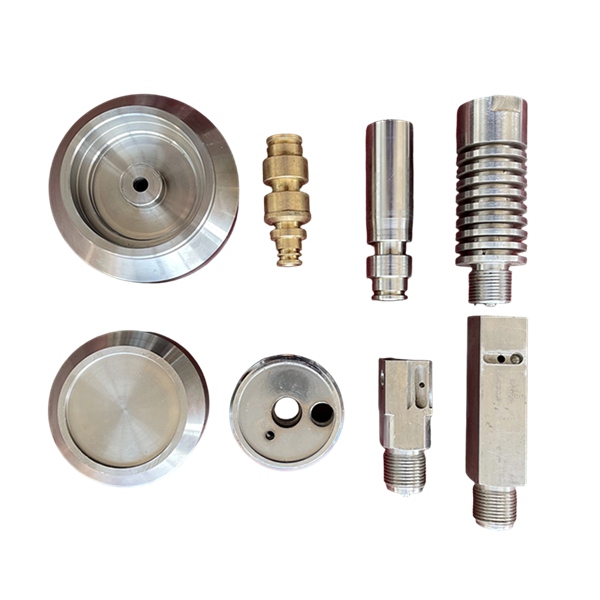
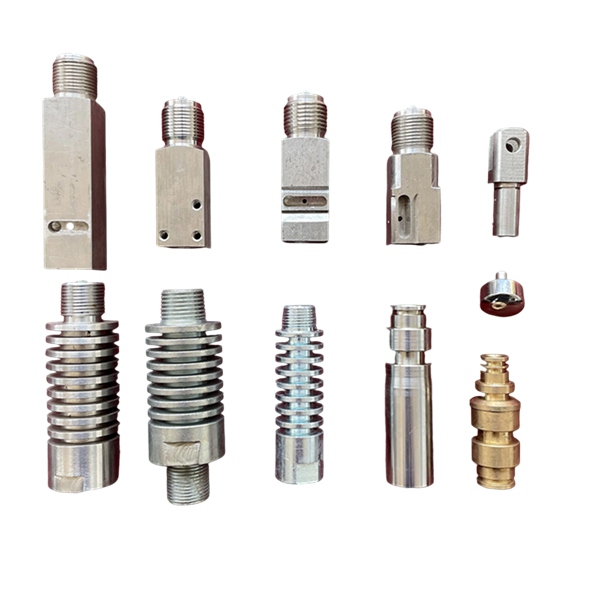
Precision CNC Sheet Metal Fabrication for Electronics Industry: Tolerances and Processes
CNC sheet metal fabrication for electronics industry applications operates at tighter dimensional tolerances than structural or architectural sheet metal fabrication. PCB mounting hole positions must be held to ±0.005 inches relative to the enclosure centerline; mounting slot dimensions must be specified to account for the tolerance stack-up of the PCB, fasteners, and enclosure at the assembly level; and cover panel flatness must be controlled to prevent gasket compression non-uniformity that degrades ingress protection ratings.
Laser Cutting for Precision Cutouts and Ventilation Patterns
CNC sheet metal fabrication for electronics industry applications uses laser cutting as the primary separation process for complex cutouts, ventilation patterns, and precision edge features. Fiber and CO2 laser cutting produce kerf widths of 0.005 to 0.015 inches, enabling CNC sheet metal fabrication shops to cut ventilation louver patterns with 0.020-inch minimum web widths, ventilation mesh patterns with 0.015-inch open areas, and mounting hole geometries with positional accuracy of ±0.003 inches. Waterjet cutting as an alternative process in CNC sheet metal fabrication for electronics industry applications offers advantages for thermally sensitive materials and thick plate but cannot match the positional accuracy or edge quality of laser cutting on thin-gauge sheet metal.
CNC Turret Punching for Production Volume Enclosures
CNC turret punch presses are the production-volume workhorse of CNC sheet metal fabrication for electronics industry applications. Turret punch systems index multiple tool stations to produce holes, slots, taps, and louvers at high throughput rates without retooling between operations. For high-volume electronics enclosure production, CNC turret punch fabrication reduces per-part cycle time by 60 to 80 percent compared to laser cutting equivalent part programs. The limitation of CNC turret punch fabrication is the minimum web between adjacent features (typically 0.050 to 0.125 inches depending on material thickness and tool geometry) and the maximum feature size constrained by the turret station diameter. Complex 3D geometries and feature sizes above 4 inches diameter typically transition from CNC turret punch to laser cutting or CNC bending followed by laser trimming.
Thermal Management in CNC Sheet Metal Fabrication for Electronics Industry
Heat sink design is a critical application of CNC sheet metal fabrication for electronics industry thermal management. Aluminum extruded heat sinks provide the highest thermal performance for a given envelope, but CNC sheet metal fabrication alternatives using stamped or machined fin geometries provide cost advantages for lower-power dissipation applications. The fin density achievable in CNC sheet metal fabrication for electronics industry heat sink applications is limited by the material thickness (fin height-to-thickness ratios above 8:1 are difficult to produce with acceptable accuracy in sheet metal) and by the surface area density that can be achieved within the available envelope.
Heat Sink Attachment Methods
The thermal interface between the electronic component and the CNC sheet metal fabrication heat sink determines the actual thermal resistance of the assembled system. Thermal interface materials (TIMs) in CNC sheet metal fabrication thermal management assemblies include thermal compound pastes (1 to 5 W/mK conductivity), thermal pads (2 to 6 W/mK), phase change materials (3 to 8 W/mK), and thermal gap fillers (3 to 10 W/mK). The attachment method—clip, screw, spring clamp, or adhesive—determines the clamping pressure on the TIM, which in turn determines the bond line thickness and thermal resistance. CNC sheet metal fabrication designs that incorporate spring-loaded clip attachments maintain consistent TIM compression over the thermal cycling life of the electronics assembly, while rigid screw attachments risk TIM pump-out during thermal cycling due to differential expansion between the component and the heat sink.
Fan and Ventilation Integration
For electronics enclosures with active thermal management requirements, CNC sheet metal fabrication integrates fan mounting provisions, air flow channel features, and filtered ventilation openings. Fan housing CNC sheet metal fabrication requires tight tolerances on the fan mounting hole positions (±0.010 inches) and perpendicularity of the mounting surface (±0.5 degrees) to ensure the fan's axial alignment and air flow efficiency. Filtered vent panels produced by CNC sheet metal fabrication for electronics industry applications incorporate wire mesh or foam filter media retained by formed flanges or mechanically fastened filter frames, requiring both the filter retention geometry and the surrounding panel structure to be manufactured to tolerances that prevent air leakage around the filter perimeter.
Surface Finishing for CNC Sheet Metal Fabrication Electronics Products
The surface finish applied after CNC sheet metal fabrication for electronics industry products serves multiple purposes: corrosion protection, electrical performance, solderability, and cosmetics. Post-fabrication surface treatments range from simple powder coating for appearance and mild corrosion protection to chemical film conversion coatings (Alodine/Chromicoat for aluminum, zinc plating for steel) that provide both corrosion resistance and electrical conductivity for EMI applications.
Conductivity Preservation at Joints
When CNC sheet metal fabrication for electronics industry enclosures requires both cosmetic finish and EMI shielding, the surface treatment strategy must preserve electrical conductivity at all joint interfaces. Powder coating and anodizing are dielectric finishes that insulate the aluminum surface, requiring that conductive surfaces at EMI seam interfaces be masked before finishing and restored with conductive sealants or gaskets after coating. Conductive plating options—silver plating, tin plating, or nickel plating—of CNC sheet metal fabrication components preserve the base material's electrical conductivity through the finishing process and are the preferred finish for high-frequency EMI shielding applications where skin effect losses must be minimized.
Conclusion
CNC sheet metal fabrication for electronics industry applications demands precision that general-purpose fabrication cannot provide. The combination of tight dimensional tolerances for PCB mounting, EMI shielding continuity at joint interfaces, thermal management performance, and surface finish quality for cosmetic applications creates a manufacturing challenge that requires a focused electronics-grade fabrication capability rather than a general-purpose sheet metal shop attempting to serve all markets. Electronics manufacturers who partner with CNC sheet metal fabrication shops that have documented process controls, calibrated measurement systems, and demonstrated experience with electronics enclosure requirements consistently achieve higher first-pass yields and lower field failure rates than those who source from general fabrication shops without electronics-specific process experience.
Frequently Asked Questions
What tolerance does CNC sheet metal fabrication for electronics industry applications achieve?
CNC sheet metal fabrication for electronics industry applications achieves standard tolerances of ±0.005 inches on hole positions and ±0.010 inches on bending dimensions, with precision shops achieving ±0.003 inches on critical features using laser cutting and precision bending.
How does CNC sheet metal fabrication address EMI shielding requirements?
CNC sheet metal fabrication maintains EMI shielding through material selection (aluminum, galvanized steel, or tin-plated steel), conductive gaskets at panel seams, and electrical continuity verification across all joint interfaces throughout the production process.
What surface finishes are available for CNC sheet metal fabrication electronics enclosures?
Standard finishes for CNC sheet metal fabrication electronics products include powder coating, anodizing (aluminum), zinc plating (steel), chemical conversion coating, and conductive plating (silver, nickel, tin) depending on corrosion resistance, electrical conductivity, and cosmetic requirements.
Can CNC sheet metal fabrication for electronics industry produce integrated heat sink features?
Yes. CNC sheet metal fabrication can incorporate laser-cut or stamped fin structures, fan housing features, and thermal interface mounting provisions into electronics enclosure designs as an integral part of the CNC sheet metal fabrication process.
References
1. IEEE 299.1-2012, "Standard Method for Measuring Shielding Effectiveness of Enclosures and Filtered Cables Used to Reduce Electromagnetic Emissions," IEEE Electromagnetic Compatibility Society, New York, 2012.
2. MIL-STD-461G, "Requirements for the Control of Electromagnetic Interference Characteristics of Subsystems and Equipment," Department of Defense Interface Standard, 2015.
3. ASME B5.46M-1996, "General Purpose Machine Tools—Test Conditions for Metal Removing Machine Tools," American Society of Mechanical Engineers, New York, 1996.
4. ASTM A653/A653M-20, "Standard Specification for Steel Sheet, Zinc-Coated (Galvanized) or Zinc-Iron Alloy-Coated (Galvannealed) by the Hot-Dip Process," ASTM International, West Conshohocken, 2020.
5. Kraus, J.D., "Electromagnetics," 5th Edition, McGraw-Hill, New York, 2003.
6. Serensen, R.T. and Nelson, R.D., "Thermal Management of Electronic Equipment: Design for Electronics Enclosures," 2nd Edition, ASME Press, New York, 2012.