

Precision in sheet metal work is not achieved by accident. It is the result of CNC sheet metal fabrication — a manufacturing approach where computer-controlled cutting, punching, and bending equipment execute programmed tool paths with repeatability that manual operations cannot match. For B2B buyers sourcing components with feature tolerances of ±0.005 to ±0.015 inches, CNC sheet metal fabrication is not optional — it is the only process category that can deliver that level of dimensional control across a production run. But not every shop with "CNC" in its name produces the same quality. This article explains what CNC sheet metal fabrication actually involves, what tolerances are achievable, and how to evaluate whether a fabrication supplier can deliver precision consistently.
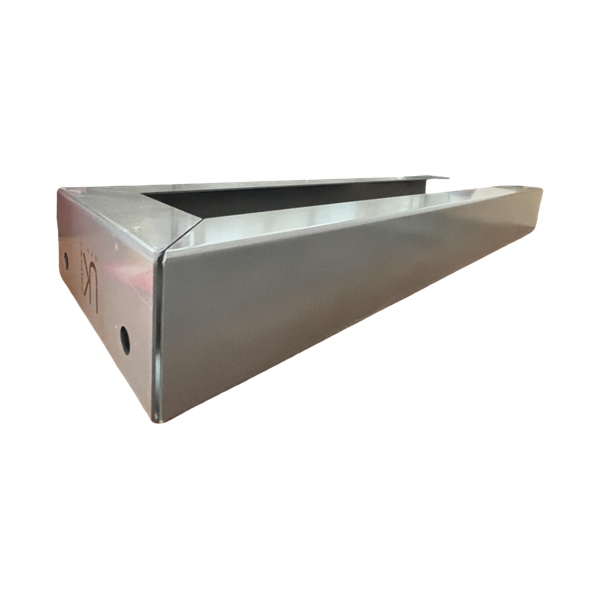
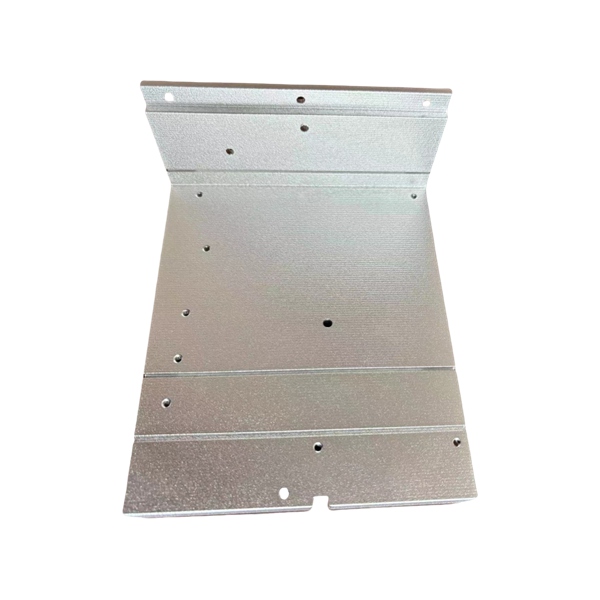
CNC Laser Cutting in Sheet Metal Fabrication
Laser cutting is the first operation in most CNC sheet metal fabrication workflows. Fiber laser cutting machines — the dominant technology in modern CNC sheet metal fabrication — produce parts from carbon steel, stainless steel, and aluminum sheet with positional accuracy of ±0.003 to ±0.005 inches. The CNC motion control system drives the cutting head along the programmed path at speeds of 100 to 1,500 inches per minute depending on material type and thickness, with the laser power automatically adjusted at corner and curve transitions to maintain consistent kerf width and edge quality.
For CNC sheet metal fabrication of parts with complex geometries — nested layouts, intricate cutout patterns, tight radii — the laser cutting program determines both accuracy and material utilization. Sophisticated CNC sheet metal fabrication nesting software optimizes part placement on the sheet to achieve 75 to 90 percent material utilization, reducing scrap cost and minimizing the number of sheets required for a production run. The CNC sheet metal fabrication programmer can also program micro-tabs — small uncut bridges that hold parts in the sheet skeleton during cutting — to prevent parts from tipping or shifting as the cutting head moves around them, which is critical for maintaining positional accuracy on small precision components.
Edge Quality and Tolerance from CNC Laser Cutting
The edge quality produced by CNC sheet metal fabrication laser cutting depends on material thickness, cutting speed, assist gas type, and laser power. On carbon steel below 0.250 inch with oxygen assist gas, a fiber laser produces a smooth cut edge with minimal dross and a heat-affected zone of 0.005 to 0.015 inches. On stainless steel with nitrogen assist gas, the edge is bright and oxide-free — suitable for welding or cosmetic applications without secondary machining. For CNC sheet metal fabrication parts where the cut edge becomes a functional surface — a sealing face, a weld prep, a sliding interface — edge quality is a dimensional characteristic, not just a cosmetic one, and the CNC sheet metal fabrication supplier should be able to provide edge quality data from their standard cutting parameter database.
CNC Turret Punching in Sheet Metal Fabrication
While laser cutting dominates new CNC sheet metal fabrication installations, CNC turret punching remains a productive and economical method for parts with standard hole patterns, louvers, embossed features, and other formed-in-place characteristics. A CNC turret punch can produce holes, notches, and forms in a fraction of the time required by laser cutting — a single hit perforates a hole in 0.2 to 0.5 seconds, compared to 2 to 5 seconds for laser cutting the same hole. For CNC sheet metal fabrication of panels with dozens of standard holes — electrical enclosures, mounting plates, chassis panels — turret punching is the faster and more economical method.
When to Choose Turret Punching Over Laser in CNC Sheet Metal Fabrication
The choice between turret punching and laser cutting in CNC sheet metal fabrication is driven by part geometry and production volume. Turret punching excels on parts with standard-shaped cutouts (round, square, obround holes), formed features (louvers, embossments, countersinks), and repetitive hole patterns. Laser cutting excels on parts with irregular contour shapes, variable radii, and non-standard cutout geometry. Many CNC sheet metal fabrication shops maintain both capabilities — punching the standard holes and laser-cutting the irregular contours on the same part — to optimize both speed and flexibility.
CNC Bending and Forming for Precision Components
CNC press brake bending is the forming operation in CNC sheet metal fabrication that produces the three-dimensional geometry — flanges, channels, boxes, and complex multi-bend parts. Modern CNC press brakes with servo-electric or hybrid drives achieve ram positioning repeatability of ±0.0004 inches, enabling consistent bend angles across production runs. The CNC controller stores springback compensation values for each material-thickness-tooling combination, automatically adjusting the ram depth to achieve the target bend angle after material springback.
For CNC sheet metal fabrication of precision components, bend angle tolerance of ±0.5 degrees is the achievable standard with experienced operator setup and precision-ground tooling. Tighter tolerances — ±0.25 degrees — require in-process angle measurement systems that measure the actual bend angle during forming and adjust ram depth in real-time. Not every CNC sheet metal fabrication shop invests in this capability, and buyers with bend angle requirements below ±0.5 degrees should verify that the supplier has the measurement and control equipment to support it.
Tooling Selection for CNC Bending in Sheet Metal Fabrication
The press brake tooling used in CNC sheet metal fabrication directly affects achievable tolerance and surface quality. Precision-ground tooling with die width tolerance of ±0.001 inches and punch nose radius tolerance of ±0.0005 inches produces more consistent bend angles than general-purpose tooling with looser tolerances. For CNC sheet metal fabrication of cosmetic parts — stainless steel enclosures, aluminum panels with visible bends — polished or chrome-plated tooling prevents die marks that would be visible on the finished part surface. The CNC sheet metal fabrication supplier's tooling inventory is a direct indicator of their forming capability and the quality level they can consistently produce.
Tolerance Stacking in Multi-Step CNC Sheet Metal Fabrication
One of the most challenging aspects of CNC sheet metal fabrication is managing tolerance accumulation across multiple operations. A part that is laser cut, then bent in three stations, then has hardware inserted — each step introduces its own dimensional variation. The CNC sheet metal fabrication engineer manages this by identifying which dimensions are critical to the final assembly and sequencing operations so that critical dimensions are established by the most accurate process available. For example, if a bolt hole pattern must be held to ±0.005 inches relative to a bent flange, the CNC sheet metal fabrication process may bend first and laser-cut the holes after bending — using the bent flange as a datum — rather than cutting all holes in the flat pattern and hoping they remain in position after bending distortion.
Quality Systems for CNC Sheet Metal Fabrication
Quality verification in CNC sheet metal fabrication requires measurement equipment with resolution finer than the tolerance being verified. For general CNC sheet metal fabrication tolerances of ±0.015 inches, digital height gauges and calipers provide adequate measurement. For precision CNC sheet metal fabrication with tolerances below ±0.005 inches, coordinate measuring machines (CMM) with measurement uncertainty below 0.0002 inches are required — and the CMM must operate in a temperature-controlled environment because thermal expansion of the part during measurement introduces error if the shop floor temperature varies by more than ±2°F from the reference temperature.
First Article Inspection in CNC Sheet Metal Fabrication
First article inspection (FAI) in CNC sheet metal fabrication documents the dimensional verification of every characteristic on the engineering drawing, using calibrated measurement equipment with documented traceability to national standards. The FAI report from a CNC sheet metal fabrication supplier is the baseline quality evidence from which production acceptance begins — and for buyers sourcing precision components, the FAI is the first checkpoint for verifying that the supplier's process is capable of meeting the specified tolerances before committing to a production run.
Conclusion
CNC sheet metal fabrication for precision components requires a coordinated system of laser cutting accuracy, CNC bending with springback compensation, appropriate tooling selection, tolerance stack management, and measurement systems that verify what the process produces. B2B buyers evaluating CNC sheet metal fabrication suppliers should look for documented process capability data (Cpk values on critical dimensions), first article inspection procedures, tooling inventory appropriate to their material and geometry, and a quality system certification that demonstrates process discipline. A CNC sheet metal fabrication manufacturer with ISO 9001 certification, integrated cutting and bending capability, and CMM-based inspection provides the process infrastructure that precision component sourcing demands. When selecting a CNC sheet metal fabrication partner, request first article inspection reports from comparable previous work and ask to see the measurement equipment that will verify your parts — the answers tell you whether the supplier's precision claims are supported by process capability or just marketing language.
FAQ
What tolerance can CNC sheet metal fabrication achieve?
CNC sheet metal fabrication achieves ±0.003 to ±0.005 inches on laser-cut features and ±0.5 degrees on CNC-bent angles with standard tooling. Precision setups with in-process measurement can achieve ±0.0005 inches and ±0.25 degrees on critical features.
What is the difference between CNC turret punching and CNC laser cutting?
In CNC sheet metal fabrication, turret punching is faster for standard holes and formed features, while laser cutting handles irregular contours and complex geometries. Many shops use both on the same part to optimize speed and flexibility.
How does springback affect CNC sheet metal fabrication bending?
Springback in CNC sheet metal fabrication causes the bend angle to open after punch release by 1 to 7 degrees depending on material. CNC press brakes compensate by overbending to a calculated depth that produces the target angle after springback.
What quality documentation should a CNC sheet metal fabrication supplier provide?
A qualified CNC sheet metal fabrication supplier provides first article inspection reports, Cpk data on critical dimensions, material test reports, and ISO 9001 quality system certification as baseline quality documentation.
References
1. ISO 9001:2015, "Quality Management Systems—Requirements," International Organization for Standardization, Geneva, 2015.
2. ASME Y14.5-2018, "Dimensioning and Tolerancing," American Society of Mechanical Engineers, New York, 2018.
3. Kalpakjian, S. and Schmid, S.R., "Manufacturing Engineering and Technology," 7th Edition, Pearson, Upper Saddle River, 2017.
4. Hosford, W.F. and Caddell, R.M., "Metal Forming: Mechanics and Metallurgy," 4th Edition, Cambridge University Press, Cambridge, 2011.
5. Montgomery, D.C., "Introduction to Statistical Quality Control," 7th Edition, Wiley, Hoboken, 2012.