

A custom metal enclosure is more than a box to hold electronics or mechanical components—it is a protective system that must keep moisture out, manage heat, resist impact, and maintain its structural integrity across years of service in whatever environment it operates in. Getting a custom metal enclosure fabrication right requires decisions about material, sealing method, thermal management, and finishing before the first cut is made. This article walks through what the custom metal enclosure fabrication process actually involves, what goes wrong when design assumptions don't match manufacturing reality, and how to work with a custom metal enclosure fabrication supplier to get an enclosure that performs in the field.
Material Selection for Custom Metal Enclosure Fabrication
The material choice for custom metal enclosure fabrication is driven by three factors: the corrosion environment, the structural requirements, and the cost target. Carbon steel is the most economical material for custom metal enclosure fabrication and is specified when the enclosure will be powder coated or painted after fabrication. The paint system provides the corrosion barrier, and the steel body provides the structural strength. Aluminum is specified for custom metal enclosure fabrication when weight is a constraint or when the enclosure will operate without paint in a mildly corrosive environment. Stainless steel is the standard material for custom metal enclosure fabrication in aggressive corrosive environments—marine, chemical processing, food processing—where painting is impractical or where the enclosure must survive wash-down with chlorinated cleaners.
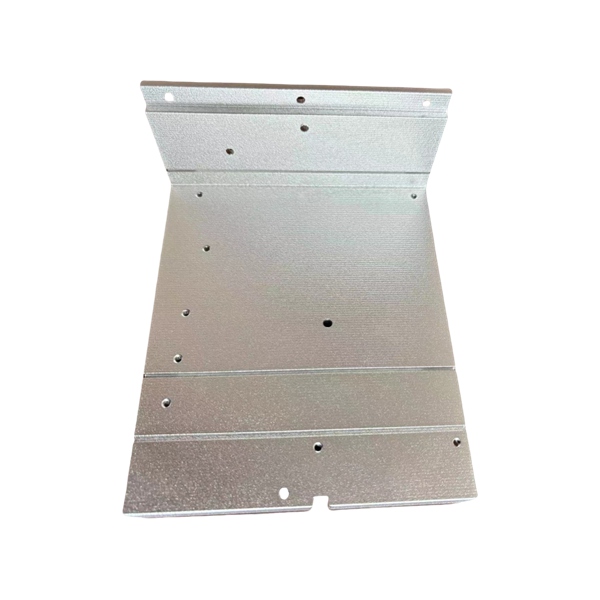
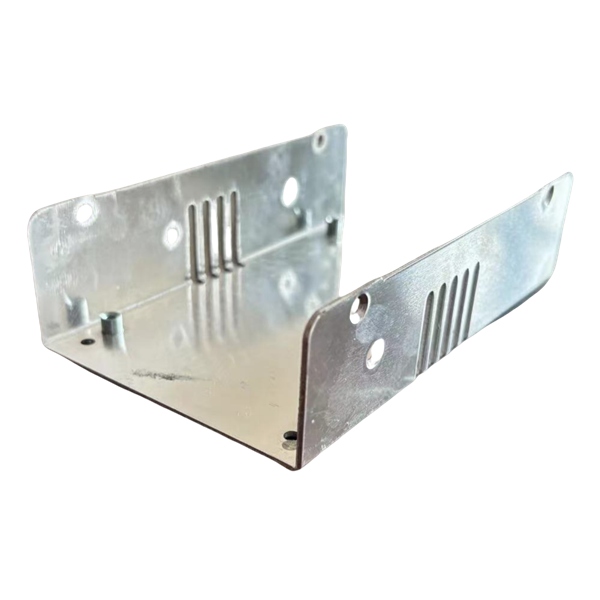
Material Gauge Selection for Custom Metal Enclosure Fabrication
The sheet thickness for custom metal enclosure fabrication is determined by the required structural rigidity and the size of the enclosure. Small custom metal enclosure fabrication cabinets (under 24 by 24 by 12 inches) typically use 0.060 to 0.080 inch material. Medium enclosures (up to 36 by 48 by 24 inches) require 0.080 to 0.125 inch material. Large custom metal enclosure fabrication enclosures above 48 inches in any dimension use 0.125 to 0.190 inch material with internal structural reinforcements—channels, hat sections, or formed ribs—to resist panel flex and maintain gasket compression under wind load or impact.
Sealing Methods in Custom Metal Enclosure Fabrication
The sealing method for custom metal enclosure fabrication determines the Ingress Protection (IP) rating—the standard that defines how well the enclosure keeps dust and water out. The most common sealing method in custom metal enclosure fabrication is a continuous gasket seal around the perimeter of the door or cover opening. Pour-in-place liquid gasket compounds are poured into a groove machined or formed in the mating surface and cure in place, producing a continuous elastomeric seal that conforms to surface irregularities. Vulcanized rubber gaskets are adhered to a continuous channel in the custom metal enclosure fabrication door or panel surface and replaced if damaged. Foam gaskets with adhesive backing are the most economical custom metal enclosure fabrication sealing option but have the shortest service life and the lowest IP rating (typically IP54 to IP65).
Gasket Compression and Retention in Custom Metal Enclosure Fabrication
Getting the gasket compression right is the detail that most affects the seal quality in custom metal enclosure fabrication. The gasket material compresses to 25 to 40 percent of its free height under the closing force of the custom metal enclosure fabrication door or cover. Too little compression and the seal leaks. Too much compression and the gasket extrudes from the groove and fails prematurely. The custom metal enclosure fabrication designer must specify the correct gasket durometer (hardness) for the groove width and compression ratio, and the fabricator must maintain consistent flange flatness so that the compression is uniform around the entire perimeter. A flange flatness deviation of more than 0.020 inches across the custom metal enclosure fabrication sealing surface will produce leaks at the high spots, regardless of gasket quality.
Thermal Management in Custom Metal Enclosure Fabrication
Every electronic or electromechanical system inside a custom metal enclosure fabrication generates heat, and that heat must be removed to keep internal components within their rated temperature range. Natural convection cooling through ventilation openings is the simplest custom metal enclosure fabrication thermal management method, effective when the internal heat load is low and the ambient temperature is moderate. For higher heat loads, custom metal enclosure fabrication suppliers add fan-forced ventilation with filtered fresh air intake and exhaust, thermoelectric coolers (Peltier devices) for compact custom metal enclosure fabrication units requiring cooling without moving parts, or air-to-air heat exchangers for custom metal enclosure fabrication in dirty environments where filtered ventilation would clog rapidly.
Calculating Heat Load for Custom Metal Enclosure Fabrication
The heat load inside a custom metal enclosure fabrication enclosure is the sum of the heat dissipation of all internal components (from manufacturer data sheets) plus solar radiation gain if the enclosure is outdoor-mounted. The custom metal enclosure fabrication thermal designer compares the calculated heat load against the thermal resistance of the enclosure walls (a function of surface area and thermal conductivity of the material) to determine whether passive cooling is adequate or active cooling is required. A typical custom metal enclosure fabrication aluminum enclosure has a thermal resistance of approximately 0.5 to 1.0 °C per watt, while steel enclosures have slightly higher resistance due to steel's lower thermal conductivity compared to aluminum.
Manufacturing Process for Custom Metal Enclosure Fabrication
A custom metal enclosure fabrication job typically moves through these stages: laser cutting of panels from sheet stock, CNC bending of flanges and features, welding of corners and joints, machining of sealing surfaces and penetrations, surface preparation and finishing, gasket installation, and final assembly and testing. The critical manufacturing steps in custom metal enclosure fabrication are the sealing surface machining or finishing—which must achieve flatness within 0.020 inches to support uniform gasket compression—and the weld quality at the corners, where leaks most commonly occur in custom metal enclosure fabrication assemblies.
Welding Quality in Custom Metal Enclosure Fabrication
Corner welds in custom metal enclosure fabrication are typically TIG (GTAW) welded for carbon steel and aluminum enclosures, producing a weld bead with minimal spatter and good cosmetic appearance that requires minimal post-weld finishing. For stainless steel custom metal enclosure fabrication, the weld is often ground flush with the panel surface after welding to eliminate the crevice at the weld toe where corrosion can initiate. All structural corner welds on custom metal enclosure fabrication parts should be inspected visually for full penetration and absence of undercut, porosity, and incomplete fusion before the enclosure proceeds to finishing. A leak at a custom metal enclosure fabrication corner weld is far more expensive to repair after painting than it is to prevent by proper weld inspection before finishing.
Surface Finishing for Custom Metal Enclosure Fabrication
The finishing system for custom metal enclosure fabrication must be specified for the service environment. Indoor custom metal enclosure fabrication enclosures in controlled environments typically receive an electro-deposition (e-coat) primer with a top coat of polyurethane enamel, providing 500 to 1,000 hours of salt spray resistance per ASTM B117. Outdoor custom metal enclosure fabrication enclosures require a more robust system: hot-dip galvanizing for steel custom metal enclosure fabrication provides 10 to 20 years of corrosion protection in most outdoor environments without repainting. Powder coating over hot-dip galvanized steel provides the best combination of long-term corrosion protection and cosmetic appearance for outdoor custom metal enclosure fabrication enclosures.
Conclusion
Custom metal enclosure fabrication is a system design problem as much as it is a manufacturing problem. The material, gauge, sealing method, thermal management approach, and finishing system all must be selected together to produce an enclosure that meets the IP rating, thermal performance, structural, and corrosion requirements of the specific application. Buyers who engage their custom metal enclosure fabrication supplier early in the design phase—before the first sheet is cut—get better enclosures at lower total cost because the fabricator can identify sealing surface flatness issues, thermal management gaps, and weld accessibility problems before they become expensive field failures. The best custom metal enclosure fabrication results come from collaborative design review between the buyer's engineering team and the fabricator's manufacturing engineering group, treating the enclosure as a system to be engineered rather than a box to be made.
Frequently Asked Questions
What IP rating can a custom metal enclosure fabrication achieve?
A properly designed and manufactured custom metal enclosure fabrication with pour-in-place gasket sealing achieves IP66 to IP67 ratings. Foam gasket sealed custom metal enclosure fabrication typically achieves IP54 to IP65.
What material is best for outdoor custom metal enclosure fabrication?
Hot-dip galvanized steel with powder coat top coat is the most economical choice for outdoor custom metal enclosure fabrication. Type 316 stainless steel is specified for coastal marine or chemical processing environments where hot-dip galvanized coating is inadequate.
How is thermal management designed into custom metal enclosure fabrication?
Custom metal enclosure fabrication thermal management starts with calculating the internal heat load, comparing it against the enclosure's thermal resistance, and selecting natural ventilation, forced air, heat exchangers, or thermoelectric cooling based on the thermal margin.
What causes leaks in custom metal enclosure fabrication?
The most common leak sources in custom metal enclosure fabrication are corner welds with incomplete penetration, sealing surfaces with flatness deviation exceeding 0.020 inches, and gasket compression outside the 25 to 40 percent target range due to inconsistent flange flatness.
References
1. IEC 60529:1989+A1:1999+A2:2013, "Degrees of Protection Provided by Enclosures (IP Code)," International Electrotechnical Commission, Geneva, 2013.
2. ASTM B117-2019, "Standard Practice for Operating Salt Spray (Fog) Apparatus," ASTM International, West Conshohocken, 2019.
3. ISO 9227:2017, "Corrosion Tests in Artificial Atmospheres—Salt Spray Tests," International Organization for Standardization, Geneva, 2017.
4. Kalpakjian, S. and Schmid, S.R., "Manufacturing Engineering and Technology," 7th Edition, Pearson, Upper Saddle River, 2017.
5. AWS D1.1/D1.1M:2020, "Structural Welding Code—Steel," American Welding Society, Miami, 2020.