

Metal stamping parts are everywhere in industrial equipment—brackets, enclosures, mounting plates, covers, structural supports—but the manufacturing process that produces them is not as widely understood as it should be. Knowing how a metal stamping parts manufacturer actually makes your components, from receiving raw coil to shipping finished parts, gives you a much better position to evaluate supplier quotes, set realistic expectations for lead time and quality, and identify potential issues before they become production problems. This article breaks down the metal stamping parts manufacturing process step by step, based on what we've seen work consistently at production stamping facilities.
Step One: Raw Material Receiving and Inspection
The metal stamping parts manufacturing process begins before any metal is cut. Incoming coil stock—for high-volume metal stamping parts—or sheet and plate—for lower-volume production—arrives at the metal stamping parts supplier's facility with material test reports documenting the chemical analysis and mechanical properties of each heat. A good metal stamping parts manufacturer inspects every incoming coil for thickness variation across the width and length, surface defects like scratches or oil spots, and edge condition. Coils that don't meet the specified thickness tolerance get rejected before they reach the press, because any variation outside spec will show up as dimensional variation in the finished metal stamping parts.
Material Storage and Coil Processing at a Metal Stamping Parts Factory
Approved coil stock for metal stamping parts production is stored in a temperature-controlled environment to minimize moisture condensation that can cause flash rusting on carbon steel surfaces. Before the coil reaches the press, it passes through a straightener that flattens coil curvature and removes residual stress from the coiling process. A well-maintained metal stamping parts facility uses servo-driven straighteners with closed-loop feedback that adjust roll pressure based on real-time thickness measurement. Properly straightened material entering the die produces metal stamping parts with significantly better flatness and positional accuracy than material with residual coil curvature.
Step Two: Die Setup and Press Configuration
Before any metal stamping parts production run begins, the die set must be installed in the press and aligned. Depending on the metal stamping parts supplier's equipment, this could involve transporting a progressive die weighing 2,000 to 20,000 pounds to the press bed, securing it with clamping shoes, feeding the coil strip through the pilot pins, and setting the press stroke height to match the die shut height. Die setup for metal stamping parts production typically requires 30 minutes to four hours depending on die size and complexity. Experienced metal stamping parts manufacturers use quick-change die systems that reduce setup time by 50 to 70 percent compared to conventional bolted clamping, improving production flexibility and reducing the economic minimum lot size for metal stamping parts orders.
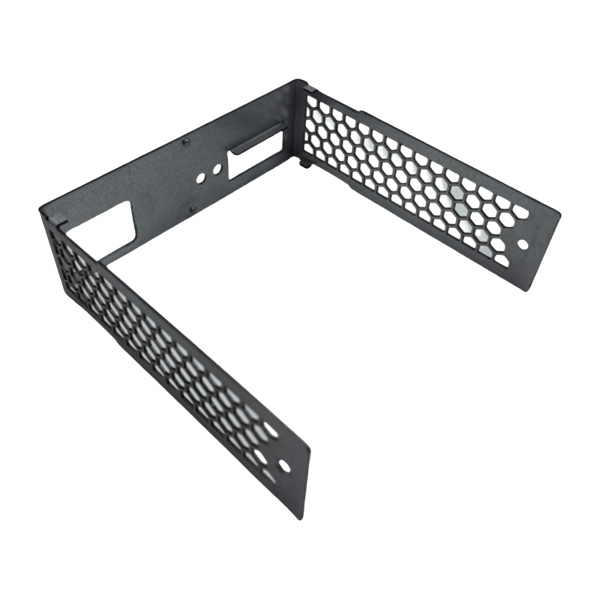
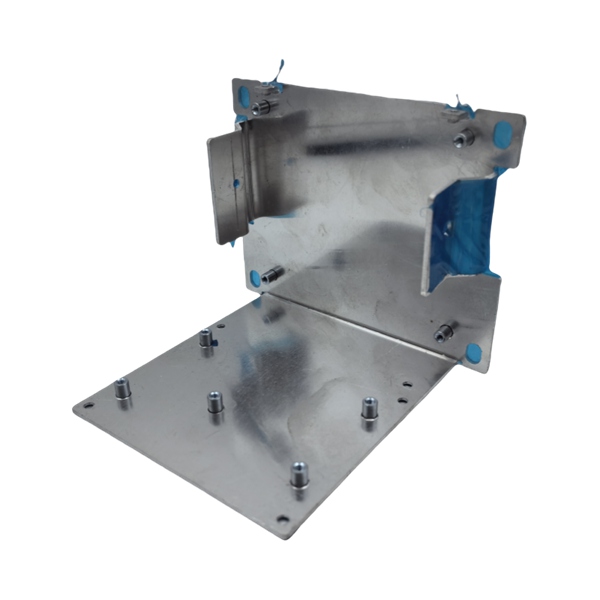
Press Selection and Tonnage Verification for Metal Stamping Parts
The press used to produce metal stamping parts must be sized correctly for the total force required. The blanking force is calculated from the material thickness, shear strength, and perimeter length of the part. The draw and form forces add additional load. A professional metal stamping parts manufacturer verifies that the press selected for the job has at least 20 percent spare tonnage above the calculated maximum, providing a safety margin that prevents press overload and protects both the tooling and the operator. Running a die on a press that's too small for metal stamping parts production risks damaging the die and producing out-of-tolerance parts.
Step Three: Blanking and Piercing Operations
The first forming operations in the metal stamping parts process—whether in a progressive die or a single-station tool—are blanking and piercing. Blanking cuts the outer perimeter profile of the metal stamping parts from the strip, while piercing creates internal holes and openings. The die clearance between punch and die for these operations is set to 5 to 10 percent of material thickness per side for carbon steel metal stamping parts, producing a cut edge that is approximately one-third rollover, one-third burnish, and one-third die break. For metal stamping parts where edge quality is critical—sealing surfaces, exposed cosmetic edges—the die clearance is tightened to 3 to 5 percent per side, increasing the burnish percentage and reducing the die break depth.
Burr Control in Metal Stamping Parts Production
Every blanking and piercing operation on metal stamping parts produces a burr on the die exit side. A burr height below 5 percent of material thickness is the standard quality target for metal stamping parts in most industrial applications. The metal stamping parts manufacturer monitors burr height as a leading indicator of punch wear—as a punch wears, the die clearance effectively increases, producing larger burrs. When burr height on metal stamping parts approaches the rejection limit, it signals that the punch needs sharpening or replacement, preventing the additional problems that come with excessively worn tooling—out-of-round holes, cracked die break zones, and dimensional drift.
Step Four: Forming, Drawing, and Bending
After blanking and piercing create the part outline and hole pattern, the forming stations in the progressive die—or separate dies in a multi-hit process—produce the 3D shape of the metal stamping parts. Forming operations for metal stamping parts include V-bending, U-bending, edge bending, curl forming, and—for more complex geometry—drawing that stretches the material into a deeper cavity. Each forming operation introduces springback that the die designer must account for. For metal stamping parts in high-strength materials, the die may incorporate overbend angles of 2 to 5 degrees per bend, with additional adjustments made during tryout based on measured as-formed angles from the first production samples.
Progressive Die Forming Sequence for Complex Metal Stamping Parts
For metal stamping parts requiring multiple forming operations—say a bracket with a 90-degree flange, a 45-degree bend, and a formed tab—the progressive die sequences the forms so that each operation deforms the material only in the zone that has already been cut free from the strip. This progressive forming sequence prevents distortion of features formed in earlier stations by later operations, and it's the primary advantage of progressive die metal stamping parts over multi-hit production. Parts move through the die one station per press stroke, emerging cut free from the carrier strip at the final station—and they don't touch another fixture or operator's hands until they land in the collection bin.
Step Five: Quality Inspection and Packaging
The final step in the metal stamping parts manufacturing process is inspection and packaging. For each metal stamping parts production lot, the manufacturer takes dimensional measurements per the first article inspection report, verifies that Cpk values remain above the acceptance threshold, and confirms surface quality meets the specification. Parts are then packaged for shipment—typically bulk-packed in corrugated boxes with layer separation, or individually packaged per customer-specific requirements. A quality-conscious metal stamping parts supplier will bag or box parts in a way that prevents them from rubbing against each other during transit, because surface scratches from in-transit friction are one of the most common sources of quality disputes between metal stamping parts manufacturers and their customers.
Conclusion
The metal stamping parts manufacturing process is a sequence of controlled operations—material inspection and coil preparation, die setup and press configuration, blanking and piercing, progressive forming, and final quality inspection—each of which must be executed correctly for the finished part to meet specification. A metal stamping parts manufacturer who invests in material inspection equipment, die setup procedures, process monitoring systems, and packaging quality is making the investments that determine whether your metal stamping parts arrive on time, in spec, and ready for assembly. Buyers who take the time to understand these process steps and evaluate whether potential metal stamping parts suppliers have them under control make sourcing decisions that deliver predictable quality and reliable delivery—not just a low quoted price.
Frequently Asked Questions
How long does a typical metal stamping parts production run take?
A typical metal stamping parts production run of 10,000 to 50,000 pieces on a progressive die running at 40 to 80 strokes per minute takes one to three shifts of machine time, plus die setup time at the start.
What causes burrs on metal stamping parts?
Burrs on metal stamping parts are caused by punch wear that increases the effective die clearance beyond the optimal range. Regular punch inspection and replacement at defined stroke intervals keeps burr height within the acceptable limit.
Can metal stamping parts be produced without tooling investment?
No. Every metal stamping parts order requires some form of die tooling. For prototype quantities, soft tooling with shorter lead time and lower cost is available. Production volumes justify harder tool steels with longer life.
What determines the flatness of metal stamping parts?
Metal stamping parts flatness is determined by material thickness uniformity, residual stress in the coil stock, die clearance uniformity, press ram alignment, and the presence or absence of leveling operations in the progressive die sequence.
References
1. ASM Handbook Volume 14B: "Sheet Metal Forming," ASM International, Materials Park, 2005.
2. Lange, K., "Handbook of Metal Forming," 2nd Edition, McGraw-Hill, New York, 1985.
3. Hosford, W.F. and Caddell, R.M., "Metal Forming: Mechanics and Metallurgy," 4th Edition, Cambridge University Press, Cambridge, 2011.
4. Automotive Industry Action Group (AIAG), "Statistical Process Control (SPC)," 2nd Edition, AIAG, Southfield, 2005.
5. Davies, R. and Hopper, D., "Stamping Tooling: Diagnosing and Solving Stamping Problems," 2nd Edition, Society of Manufacturing Engineers, Dearborn, 2005.