

The OEM automotive components manufacturing landscape is undergoing the most profound transformation in its history. The simultaneous convergence of electrification, lightweighting mandates, autonomous driving systems, and supply chain digitalization is forcing automotive original equipment manufacturers and their Tier 1 component suppliers to rebuild their engineering, manufacturing, and sourcing capabilities from the ground up. For companies serving the automotive industry—whether as component suppliers, tooling manufacturers, or production equipment providers—understanding these OEM automotive components manufacturing trends is not optional. It is the difference between positioning for growth and becoming obsolete.
Electric Vehicle Platform Displacement of ICE Components
The most disruptive OEM automotive components manufacturing trend is the structural displacement of internal combustion engine (ICE) powertrain components by electric vehicle (EV) platforms. Battery electric vehicles (BEVs) require approximately 40 percent fewer moving parts than equivalent ICE vehicles, eliminating entire component categories including engine blocks, cylinder heads, crankshafts, camshafts, transmission assemblies, and exhaust systems. The cumulative impact on component suppliers is severe: a supplier whose revenue is 70 percent dependent on ICE powertrain components faces a market contraction of similar magnitude as EV adoption accelerates past 30 percent of new vehicle sales globally.
New Component Categories in EV Platforms
The EV platform creates entirely new OEM automotive components manufacturing categories. Battery enclosures—large-format aluminum or multi-material structural housings that integrate thermal management systems, high-voltage busbars, and crash structure requirements—represent a component category that did not exist in ICE vehicles. Electric axle assemblies (e-axles) combine motor, inverter, and transmission into a single integrated unit requiring new manufacturing capabilities in precision assembly, rotor balancing, and power electronics integration. DC-DC converters, onboard chargers, and battery management systems create demand for electronics manufacturing services with automotive IATF 16949 quality management certification.
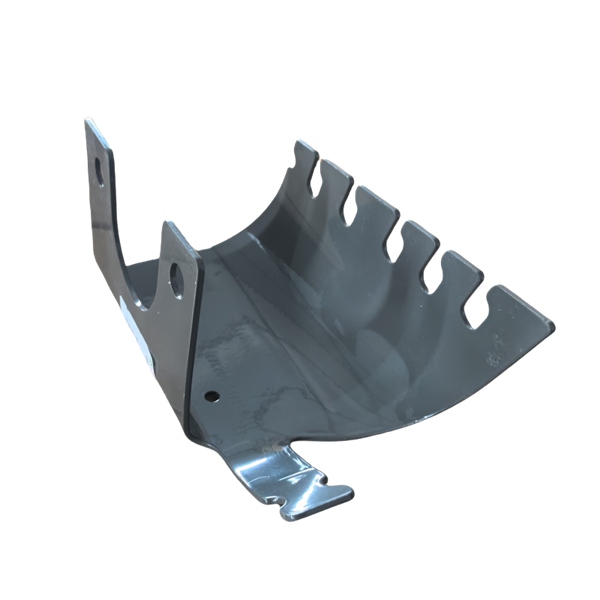
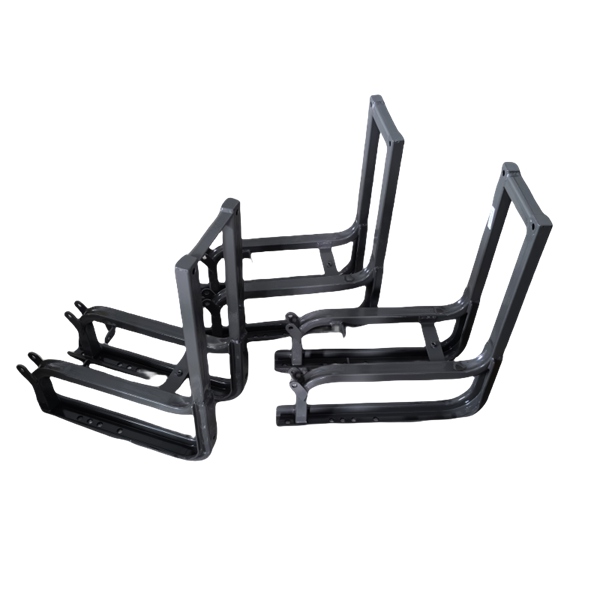
Battery Housing Structural Requirements
The battery housing in OEM automotive components manufacturing for EVs represents one of the largest single-part forming challenges in automotive production. These structural components, spanning the full vehicle width and length in skateboard platform architectures, must integrate crash energy absorption, thermal runaway containment, waterproof sealing, and electromagnetic interference shielding in a single aluminum structural assembly. Multi-material battery housings combining aluminum extrusions, castings, and sheet metal stampings in a bonded and welded assembly are the current state of the art, requiring manufacturing capabilities in large-format extrusion, high-speed automated welding, and precision fixture assembly.
Lightweighting: Aluminum, Magnesium, and Multi-Material Strategies
Both EV and ICE vehicles are subject to increasingly stringent fleet fuel economy and CO2 emission regulations. The average EV must offset the weight penalty of its battery pack (300 to 600 kg for a 100 kWh pack) by reducing structural mass elsewhere in the vehicle. OEM automotive components manufacturing for lightweighting employs aluminum stampings and extrusions, magnesium die castings, and multi-material adhesive-bonded assemblies to achieve the mass reduction targets specified by vehicle program targets—typically 15 to 25 percent body-in-white mass reduction versus prior generation platforms.
Aluminum Sheet Metal Stamping for Structural Panels
Aluminum sheet metal stamped components dominate OEM automotive components manufacturing for structural body panels. Door inner panels, decklid inner structures, and floor pan assemblies are increasingly specified in aluminum alloys (6111, 6022, 6016) that require specialized forming processes including warm forming for complex geometries and specialized die lubricants compatible with aluminum's galling tendency. The tooling investment for aluminum automotive stampings is 30 to 50 percent higher than equivalent steel tooling due to the higher wear rates and specialized die material requirements, driving consolidation among automotive stamping suppliers who can absorb these capital requirements.
Adhesive Bonding in Multi-Material Assemblies
The integration of dissimilar materials—carbon fiber reinforced polymer (CFRP), aluminum, and high-strength steel—in a single automotive structure requires adhesive bonding as the primary joining method. Adhesive bonding in OEM automotive components manufacturing eliminates galvanic corrosion at dissimilar metal interfaces, distributes structural loads across bonded surfaces, and enables joint configurations impossible with mechanical fasteners alone. Structural adhesives in automotive applications must survive environmental exposure at -40°F to +185°F, vibration loads, and crash energy absorption requirements, with bond line quality verified by ultrasonic C-scan inspection in production environments.
Supply Chain Digitalization and Manufacturing Execution
OEM automotive components manufacturing trends in supply chain management are dominated by digitalization initiatives that connect Tier 1 suppliers, sub-Tier suppliers, and OEM production systems in real time. Automotive supply chain 4.0 architectures integrate manufacturing execution systems (MES), enterprise resource planning (ERP) platforms, and supplier portal interfaces through standardized APIs that enable OEM production schedules to propagate automatically to Tier 1 and Tier 2 suppliers within hours of a production schedule change rather than the days required by traditional EDI systems.
Real-Time Traceability and Blockchain Integration
The 2021 semiconductor shortage demonstrated the fragility of automotive supply chain visibility—the industry discovered that no OEM had real-time visibility into Tier 2 semiconductor inventory levels for their automotive microcontrollers. In response, major OEMs are implementing blockchain-based traceability platforms that record component genealogy, material certifications, and production lot data at each supply chain node. This OEM automotive components manufacturing trend toward full-chain digital traceability serves dual purposes: enabling rapid problem isolation during quality investigations and satisfying regulatory requirements for EV battery material chain-of-custody documentation under emerging EU battery regulations.
Autonomous Vehicle Sensor Integration Manufacturing
Levels 3 through 5 autonomous vehicles add sensor suites—LiDAR, radar, camera systems, and ultrasonic sensors—to the vehicle content that requires new manufacturing capabilities across the supply chain. Camera module manufacturing for automotive applications requires precision optical alignment under clean room conditions, ISO TS 16949-compliant quality management systems, and environmental durability verification across -40°C to +85°C operating ranges. LiDAR and radar components require precision machining, optical assembly, and hermetic sealing capabilities that are new to most automotive suppliers, driving partnerships with aerospace and semiconductor precision manufacturing companies as supply chain entrants.
Conclusion
OEM automotive components manufacturing is being reshaped by a convergence of technology shifts that challenge the industry simultaneously. EV platform displacement eliminates traditional component categories while creating entirely new ones. Lightweighting mandates drive adoption of aluminum, multi-material assemblies, and structural adhesives that require new manufacturing capabilities. Supply chain digitalization is rebuilding the supplier-OEM relationship on real-time data exchange platforms. And autonomous vehicle sensor integration is drawing precision manufacturing expertise from adjacent industries into the automotive supply chain. Suppliers who recognize these OEM automotive components manufacturing trends early and invest in the capabilities they require are positioning themselves to participate in the automotive sector's next growth cycle. Those who do not will find their ICE-era capabilities increasingly irrelevant in a vehicle market that has already shifted.
Frequently Asked Questions
How is the EV transition affecting traditional automotive component suppliers?
Traditional ICE powertrain suppliers face declining demand as EV adoption accelerates, with some categories (engine blocks, transmissions, exhaust components) experiencing 40 to 70 percent projected volume reductions by 2030 in major markets.
What new components are created by EV platforms that didn't exist in ICE vehicles?
EV platforms create demand for battery housings, e-axle assemblies, DC-DC converters, onboard chargers, thermal management modules, and high-voltage busbars—component categories that represent entirely new manufacturing domains for suppliers.
How is lightweighting driving change in OEM automotive components manufacturing?
Lightweighting mandates are shifting OEM automotive components manufacturing toward aluminum stampings, extruded profiles, magnesium die castings, and adhesive-bonded multi-material assemblies that require different tooling investments and joining process capabilities than traditional steel fabrication.
What role does digitalization play in automotive supply chain manufacturing trends?
Digitalization connects OEM production schedules with supplier manufacturing execution systems in real time, replacing traditional EDI batch communication with API-based continuous data exchange that enables faster response to demand changes and improved traceability across the supply chain.
References
1. IATF 16949:2016, "Quality Management System Requirement for Automotive Production and Relevant Service Part Organizations," International Automotive Task Force, 2016.
2. ASTM F2759-14, "Standard Specification for Design and Manufacture for Bonded Internal Hydrocephalus shunts," ASTM International, West Conshohocken, 2014.
3. Kleinknecht, W., "Automotive Supply Chain Management: Challenges and Opportunities," Production and Operations Management, Vol. 28, No. 4, 2019, pp. 886-907.
4. Echar儿, I. and González, F., "Multi-Material Lightweight Design for Automotive Body Structures," Materials & Design, Vol. 112, 2016, pp. 380-391.
5. Hopkinson, N., Hague, R., and Dickens, P., "Rapid Manufacturing: An Industrial Revolution for the Digital Age," Wiley, Chichester, 2006.
6. Rivière, A. and Penazzi, L., "Battery Electric Vehicle Market Penetration Forecasts: A Global Supply Chain Impact Analysis," Applied Energy, Vol. 279, 2020, 115841