

In original equipment manufacturing, OEM CNC machining services occupy the critical middle ground between prototype production and full-scale manufacturing. OEM CNC machining services produce the production-representative components that OEMs need to validate assembly processes, satisfy regulatory requirements, and build initial inventory before production tooling is complete—all while maintaining the traceability, quality documentation, and material certification that distinguish OEM-level manufacturing from general job-shop machining. This article explains OEM CNC machining services from the perspective of the OEM buyer who needs to qualify a machining partner for custom metal products that will carry the OEM's brand and meet its quality standards.
What OEM CNC Machining Services Include
OEM CNC machining services encompass more than simply cutting metal to drawing dimensions. OEM-level CNC machining services include first article inspection per AS9102 or customer-specified requirements, material certification with mill test reports, statistical process control on critical characteristics, lot traceability, and deviation management procedures that comply with the OEM's approved supplier quality requirements. An OEM CNC machining service provider maintains a quality management system certified to ISO 9001 minimum, with AS9100D for aerospace OEMs, ISO 13485 for medical device OEMs, or IATF 16949 for automotive OEMs depending on the market served.
Production-Equivalent Components from OEM CNC Machining Services
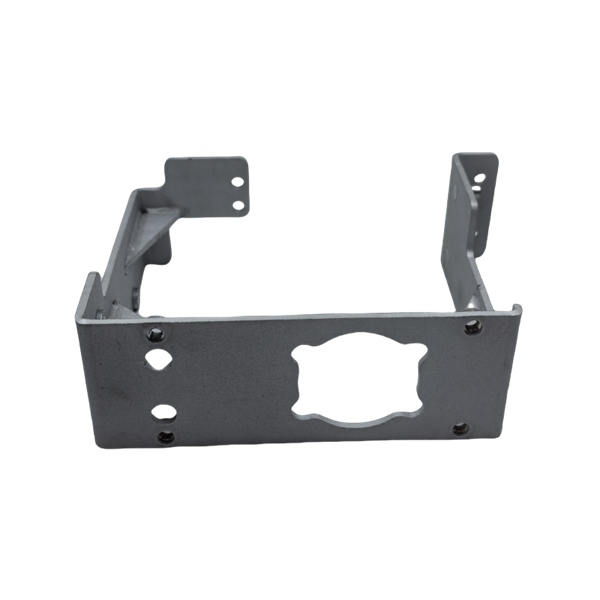
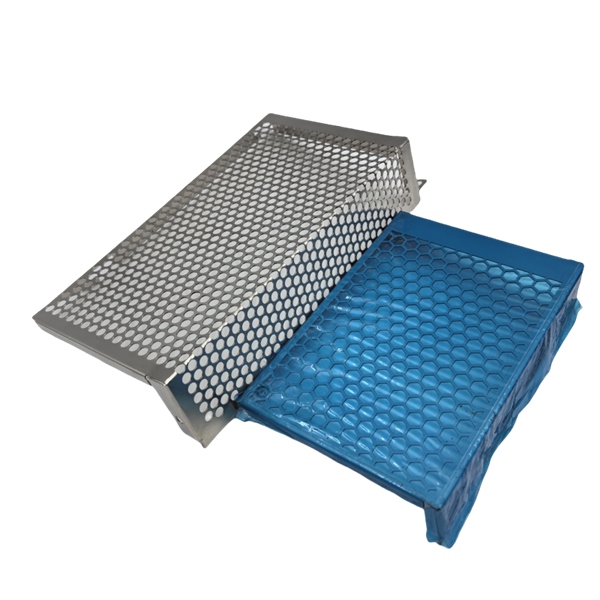
The defining characteristic of OEM CNC machining services is that they produce components functionally equivalent to production parts. While castings, forgings, and stampings may be the ultimate production method for high-volume components, OEM CNC machining services produce the same component from bar or plate stock in the same material grade, with the same surface finish, and—for critical dimensions—within the same tolerance band as the production part. This functional equivalence enables OEMs to conduct assembly trials, durability testing, and reliability validation on OEM CNC machining services components with confidence that the test results will translate to the production process.
Process Capabilities in OEM CNC Machining Services
OEM CNC machining services deploy the same machine tool platforms as general precision machining—3-axis and 5-axis machining centers, CNC lathes, Swiss-type turning machines, and multi-tasking mill-turn centers—but with an emphasis on documentation and process control that distinguishes OEM-level CNC machining services from less stringent machining operations.
Multi-Axis Machining for Complex OEM Components
OEM components with complex geometry—compound-angle hydraulic ports, contoured aerospace brackets, medical device housings with internal undercuts—require 5-axis OEM CNC machining services. Continuous 5-axis machining in OEM CNC machining services produces complex contoured surfaces with positional accuracy of ±0.003 mm, maintaining feature-to-feature relationships without the cumulative repositioning errors of 3-axis machining with multiple setups. For OEM CNC machining services on 5-axis machines, the CAM programming complexity and setup verification time are the primary cost drivers—not the spindle time—and OEM CNC machining services providers invest in high-skill CAM programmers whose expertise justifies the programming premium that 5-axis OEM CNC machining services commands over 3-axis equivalents.
Precision Turning in OEM CNC Machining Services
Rotational OEM CNC machining services on CNC lathes and Swiss-type machines produce cylindrical components with diameters held to ±0.0005 to ±0.001 inches for standard precision and ±0.0002 to ±0.0005 inches for precision OEM CNC machining services. Swiss-type turning in OEM CNC machining services produces components with length-to-diameter ratios up to 20:1 while maintaining concentricity of ±0.001 inches between turned features—essential for medical device guidewires, aerospace hydraulic fittings, and automotive fuel system components that cannot be produced on conventional chuck-type lathes. OEM CNC machining services that provide Swiss-type turning capability serve OEMs producing high-aspect-ratio components where the precision-deflection tradeoff of conventional turning makes the part geometry unachievable.
Material Options and Sourcing in OEM CNC Machining Services
OEM CNC machining services serve OEMs who require verified material sourcing that meets their supply chain quality requirements. The material specification in OEM CNC machining services is not merely a grade designation—it is a documented supply chain that traces material from the mill through the distribution system to the specific heat number from which the component was machined.
Material Sourcing and Mill Test Report Traceability
Every OEM CNC machining service engagement must begin with material sourcing verification. The OEM CNC machining services provider must confirm that the material grade meets the buyer's specification, that the material test report covers the required chemistry and mechanical property verification, and that the heat number is traceable from the mill certificate through the supplier's inventory records to the bar or plate from which each component was machined. For aerospace OEM CNC machining services, the material must be produced to an AMS or customer-sourced specification, with documented FPI (first production inspection) and material traceability per FAA regulations. Medical device OEM CNC machining services require material compliant with ASTM F138 for implants or ASTM B348 for surgical instruments, with chemistry and mechanical property testing per the applicable standard.
Heat Treatment Integration in OEM CNC Machining Services
Many OEM CNC machining services require post-machining heat treatment to achieve final mechanical properties. CNC-machined components in 7075-T73 aluminum must be heat-treated to T73 temper after rough machining to achieve the specified resistance to stress corrosion cracking. 4140 steel OEM CNC machining services components may require quench and temper heat treatment to achieve the specified yield strength and hardness range. The OEM CNC machining services provider managing heat treatment as a secondary operation must maintain furnace calibration records per AMS2750 or customer-equivalent standards, hardness test reports after heat treatment, and lot separation procedures that prevent mixing of heat-treated and non-heat-treated components.
Quality Systems and Final Inspection in OEM CNC Machining Services
The quality system of OEM CNC machining services is what distinguishes them from general machining operations. OEM-level CNC machining services maintain documented quality procedures with defined inspection frequency, non-conformance handling, corrective and preventive action processes, and continuous improvement systems that are audited annually by the OEM's quality team.
First Article Inspection and AS9102 Compliance
OEM CNC machining services first article inspection (FAI) documents dimensional verification of every characteristic specified on the engineering drawing, records the measurement equipment used with calibration status, and provides a conformance determination for each feature. Aerospace OEM CNC machining services FAI must comply with AS9102, which defines the form, content, and retention requirements for the inspection report. The FAI from OEM CNC machining services is the baseline quality evidence from which production process validation begins—the OEM's signature on the FAI constitutes acceptance of the process capability demonstrated in the initial production run.
Conclusion
OEM CNC machining services deliver custom metal products with the quality documentation, material traceability, and process control that OEM supply chains require. The difference between OEM CNC machining services and general precision machining is not the machine tool technology—it is the quality system infrastructure, documented process verification, and regulatory compliance capability that OEM CNC machining services providers maintain. OEMs who qualify CNC machining services suppliers against documented quality system certification, material sourcing verification, first article inspection capability, and regulatory compliance experience establish sourcing relationships that support regulatory submissions, satisfy customer quality audits, and maintain supply chain integrity from prototype through production.
Frequently Asked Questions
What distinguishes OEM CNC machining services from general machining?
OEM CNC machining services provide quality system certification (ISO 9001 minimum, AS9100D, ISO 13485, or IATF 16949 as applicable), first article inspection documentation, material traceability with mill test reports, and deviations management compliant with OEM approved supplier requirements.
What certifications should OEM CNC machining services providers hold?
ISO 9001:2015 is the baseline. Aerospace OEMs require AS9100D, medical device OEMs require ISO 13485, and automotive OEMs require IATF 16949. Additional third-party certifications add supply chain credibility but are not required by most OEM procurement specifications.
Can OEM CNC machining services produce parts for regulatory submissions?
Yes. OEM CNC machining services with complete quality documentation produce components suitable for FDA 510(k) submissions, CE marking technical files, and customer-specific first article approval packages required in regulated manufacturing supply chains.
How do I qualify a provider for OEM CNC machining services?
Request the supplier's quality certificate, first article inspection reports from similar historical jobs, material certification procedures, non-conformance management process, and references from current OEM customers producing comparable components to yours.
References
1. ISO 9001:2015, "Quality Management Systems—Requirements," International Organization for Standardization, Geneva, 2015.
2. AS9100D:2016, "Quality Management Systems—Requirements for Aviation, Space, and Defense Organizations," SAE International, Warrendale, 2016.
3. ISO 13485:2016, "Medical Devices—Quality Management Systems—Requirements for Regulatory Purposes," International Organization for Standardization, Geneva, 2016.
4. IATF 16949:2016, "Quality Management System Requirements for Automotive Production," International Automotive Task Force, 2016.
5. SAE AMS2750G, "Pyrometry," SAE International, Warrendale, 2020.