

When sourcing stamped metal components for your products, you'll eventually face the choice between working with an OEM stamping manufacturer directly or going through a trading company intermediary. The decision has real consequences for your quality, cost, lead time, and supply chain risk—and the right answer depends on what you're actually trying to accomplish. After years of working with buyers who chose both paths, we've seen the pattern clearly: one choice creates long-term value, and the other creates long-term complications. Here's what you actually need to know.
What an OEM Stamping Manufacturer Actually Does
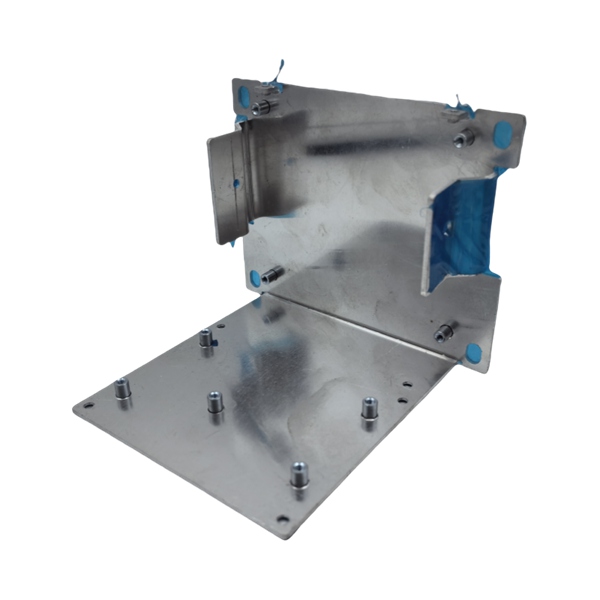
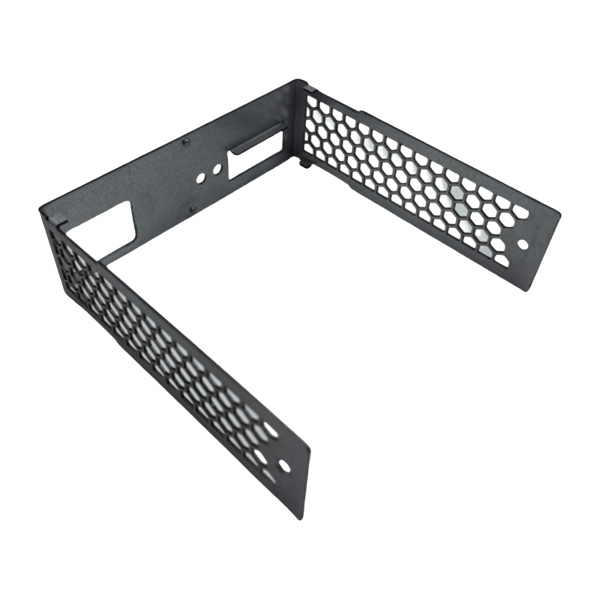
An OEM stamping manufacturer is a production facility with its own equipment, tooling, workforce, and quality systems. They take your part drawing, engineer the stamping process, build or modify the dies, run production, and ship finished parts to your dock. The OEM stamping manufacturer owns every step of the manufacturing process. When something goes wrong—a dimension drifts out of spec, a die needs emergency repair, a material substitution question comes up—the OEM stamping manufacturer resolves it because they control the variables. There's no finger-pointing between a trading desk and a factory floor, because they're the same entity.
Direct Engineering Access at an OEM Stamping Manufacturer
One of the most practical advantages of working with an OEM stamping manufacturer is direct access to process engineers. When you need DFM feedback on a new OEM stamping manufacturer part, you get it from the die designer and process engineer who will actually produce it—not from a sourcing agent who forwards the question to someone else and waits for an answer. This direct engineering relationship shortens the quoting cycle, accelerates tooling qualification, and makes ongoing production problem-solving dramatically faster. For OEM stamping manufacturer buyers who run high-mix production programs with frequent design revisions, this engineering access is one of the most undervalued advantages of direct factory sourcing.
What a Trading Company Actually Does
A trading company connects buyers with manufacturers—typically overseas stampers—and handles the commercial transactions, logistics, and sometimes quality inspection in between. The trading company takes your order, farms it out to their network of contract stamping facilities, arranges ocean freight and customs clearance, and delivers parts to you. They mark up the supplier's price, and that margin is their business model. The quality of the OEM stamping manufacturer they connect you with varies enormously, and the trading company usually has limited visibility into the actual production process at any given facility.
The Communication Gap in Trading Company Sourcing
When you request a specification change or flag a quality issue with a trading company, that communication goes through the trading company's sales team before it reaches the actual OEM stamping manufacturer floor. Each translation of your request introduces delay and the risk of information distortion—a tolerance change gets described incorrectly, a material substitution request gets lost, a quality concern gets softened to preserve the commercial relationship. For OEM stamping manufacturer parts in regulated industries—medical devices, aerospace, automotive safety components—this communication gap is not just an inconvenience. It is a quality system risk that your auditors will flag and your customers will eventually notice.
Quality Control: Who Actually Owns It
The fundamental difference between sourcing from an OEM stamping manufacturer and a trading company is where quality accountability lives. An OEM stamping manufacturer owns their quality system. They hold ISO 9001 or sector-specific certifications (IATF 16949, AS9100D, ISO 13485), run statistical process control on critical dimensions, conduct first article inspections, and maintain device history records. When an OEM stamping manufacturer ships a non-conforming part, they are accountable to you under their quality system, and they have the process ownership to implement a corrective action.
Quality Risk in Trading Company Supply Chains
A trading company's quality control is fundamentally different. The trading company may perform incoming inspection on parts before shipping, but they typically do not have the engineering depth to conduct root cause analysis when a defect occurs—they can only escalate the complaint to their contract manufacturer and request a replacement. For OEM stamping manufacturer parts where the defect root cause is a die wear issue, a material lot problem, or a process drift, this escalation chain delays corrective action by days or weeks while production continues and the non-conforming parts accumulate. The trading company's quality inspection is a sampling activity, not a process control system, and the difference matters when you're running volume production.
Cost Structure and Total Cost of Ownership
The trading company's markup—the margin they add to the OEM stamping manufacturer's production cost—ranges from 15 to 40 percent depending on the trading company's size, the complexity of the sourcing logistics, and how aggressively they competed the business. This markup may be acceptable when the alternative is building your own stamping capability in-house, but it should be evaluated against the total cost of ownership, not just the quoted unit price. A trading company that appears cheaper on unit price may not account for the inspection costs, rework costs, delayed delivery costs, and quality dispute resolution time that come from sourcing through an intermediary.
Hidden Costs in Trading Company Sourcing
Industrial buyers who have sourced through both channels consistently report that the unit price advantage of trading company sourcing narrows significantly once they account for inspection overhead, expedited shipping premiums, replacement part costs, and engineering time spent managing the intermediary relationship. For OEM stamping manufacturer parts with tight tolerances or critical quality requirements, the hidden costs of trading company sourcing frequently exceed the perceived price advantage within the first production year.
Lead Time and Supply Chain Risk
Lead time from an OEM stamping manufacturer with in-house tooling and production capacity typically runs 4 to 8 weeks for tooling qualification and 2 to 4 weeks for production runs after tooling approval. An OEM stamping manufacturer close to your market eliminates ocean transit time—typically 3 to 5 weeks—which compresses total lead time by 30 to 50 percent compared to overseas trading company sourcing. More importantly, an OEM stamping manufacturer with domestic or near-shore capacity can respond to expedited orders and volume changes much faster than a trading company coordinating with a distant contract facility.
Supply Chain Concentration Risk
Trading company sourcing concentrates your supply chain risk in a single commercial relationship. If the trading company loses access to their contract stamping facility—due to a commercial dispute, a capacity shortage, or geopolitical disruption—you lose your supply chain with no direct relationship with the actual producer. An OEM stamping manufacturer relationship gives you direct access to the production asset. If you need to qualify a backup supplier, you know exactly who makes your parts and can begin that qualification directly.
Conclusion
Comparing an OEM stamping manufacturer against a trading company ultimately comes down to where you want quality accountability to live and how much engineering access you need to produce your parts well. An OEM stamping manufacturer provides direct process control, direct engineering access, full quality system accountability, and faster domestic lead times—at a unit price that reflects actual production cost without an intermediary markup. A trading company provides convenience and access to overseas production networks, but at the cost of engineering access, quality transparency, and supply chain resilience. For OEM stamping manufacturer parts in regulated or performance-critical applications, the trading company convenience rarely justifies the risk. For simple, high-volume, tolerance-insensitive OEM stamping manufacturer parts where cost is the dominant criterion, a trading company relationship may be acceptable. Know which category your parts fall into before you choose.
Frequently Asked Questions
What certifications should an OEM stamping manufacturer hold?
An OEM stamping manufacturer should hold ISO 9001:2015 as a minimum. Automotive suppliers need IATF 16949:2016, aerospace needs AS9100D, and medical device manufacturers need ISO 13485:2016.
How much does a trading company markup typically add to OEM stamping manufacturer pricing?
Trading company markups typically range from 15 to 40 percent above the actual OEM stamping manufacturer production cost, depending on logistics complexity and sourcing market conditions.
Can a trading company provide the same quality documentation as an OEM stamping manufacturer?
Most trading companies cannot provide AS9102 first article inspection reports, AS9100D process FMEAs, or device history records with the depth and traceability of a qualified OEM stamping manufacturer.
What is the typical lead time difference between an OEM stamping manufacturer and overseas trading company sourcing?
An OEM stamping manufacturer with domestic or near-shore capacity delivers 4 to 8 weeks faster than overseas trading company sourcing when ocean transit time is included, with significantly better responsiveness to expedited requests.
References
1. ISO 9001:2015, "Quality Management Systems—Requirements," International Organization for Standardization, Geneva, 2015.
2. IATF 16949:2016, "Quality Management System Requirements for Automotive Production," International Automotive Task Force, 2016.
3. AS9100D:2016, "Quality Management Systems—Requirements for Aviation, Space, and Defense Organizations," SAE International, Warrendale, 2016.
4. ISO 13485:2016, "Medical Devices—Quality Management Systems—Requirements for Regulatory Purposes," International Organization for Standardization, Geneva, 2016.
5. Montgomery, D.C., "Introduction to Statistical Quality Control," 7th Edition, Wiley, Hoboken, 2012.