

Progressive die stamping is the highest-productivity sheet metal forming method available for complex components at production volumes above 50,000 pieces annually. Understanding the progressive die stamping process—the mechanics of how material advances through multiple forming stations in a single press cycle—is essential for engineering managers and procurement leaders who need to evaluate whether progressive die stamping delivers the right combination of cost efficiency, dimensional accuracy, and production speed for their application.
How Progressive Die Stamping Works: Process Mechanics
In progressive die stamping, a continuous coil of sheet metal strip is fed through a multi-station die mounted on a power press. Each stroke of the press cycle advances the strip one station forward, during which every station simultaneously performs its designated operation on the material. A typical progressive die stamping sequence for an industrial bracket—blank, draw, pierce, cam form, flange, and cut-off—completes all six operations in a single press cycle of less than one second. The part emerges from the final station as a finished stamping, separated from the carrier strip and dropping into a collection bin.
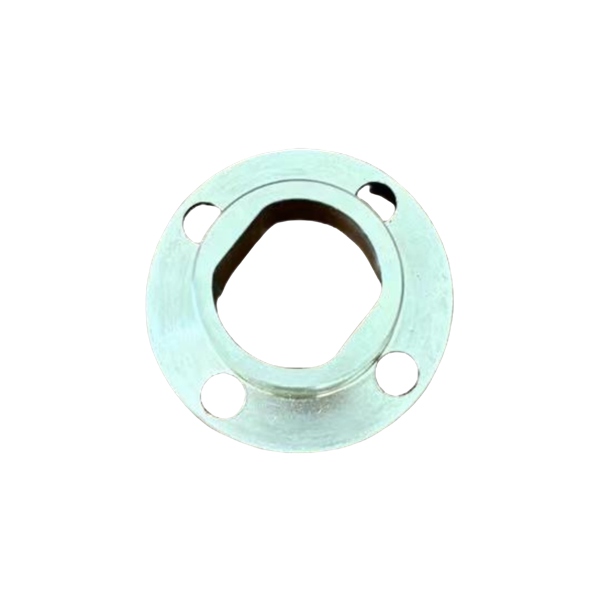
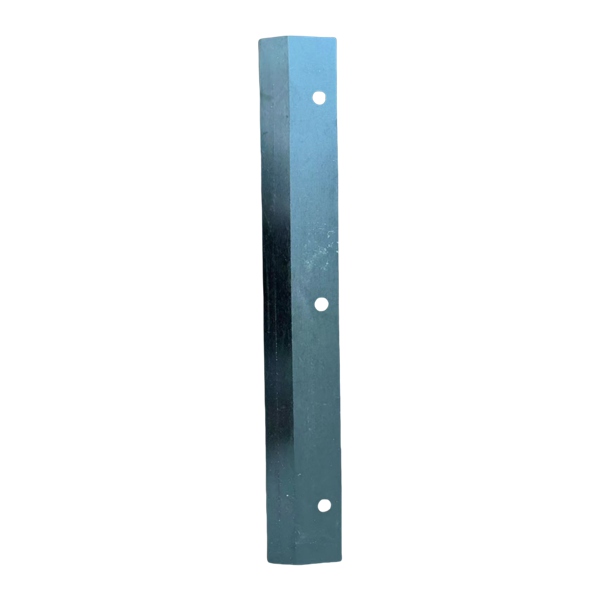
The Role of Each Die Station in Progressive Die Stamping
Every station in a progressive die stamping die set serves a specific function in the overall forming sequence. Station 1—the blank station—cuts the perimeter outline of the part from the strip, leaving it connected to the carrier strip. Station 2 through N perform the progressive forming operations: shallow draws deepen in successive stations, holes are pierced in two or more stations to reduce individual station force requirements, cam actions produce undercuts inaccessible to straight-down vertical motion, and draw beads constrain material flow in the flange area to prevent wrinkling. Station N+1—the cut-off station—separates the finished progressive die stamping part from the carrier strip. The die designer must sequence these operations so that each station deforms only the material that has already been cut free from the strip, while respecting the mechanical limits of the material's formability at each progressive strain level.
Strip Layout and Material Utilization in Progressive Die Stamping
The strip layout—the arrangement of part profiles on the coil width and the pitch between successive parts in the feed direction—directly determines the material utilization rate of progressive die stamping. Optimal progressive die stamping strip layouts achieve 85 to 95 percent material utilization for simple symmetrical parts and 70 to 85 percent for complex asymmetric geometries. Bridge-connected strip layouts, where adjacent parts share uncut material bridges that are sheared in the final cut-off station, improve material utilization but increase die complexity and cost. Buyers evaluating progressive die stamping quotes should request the strip layout drawing to verify that the supplier's material utilization estimate reflects an optimized design rather than a conservative first-pass layout.
Production Advantages of Progressive Die Stamping
Progressive die stamping delivers its strongest economic advantage through the combination of high stroke rate, minimal labor input per part, and excellent material utilization. A progressive die stamping operation running at 60 strokes per minute produces 3,600 parts per hour with a single machine operator monitoring multiple presses simultaneously. Compare this to multi-hit single-action stamping, which requires manual material handling between each forming press and produces 60 to 120 parts per hour per operator. For production volumes in the 50,000 to 10,000,000 pieces-per-year range, progressive die stamping typically delivers 40 to 70 percent lower total part cost than any alternative stamping method.
Consistency and Repeatability in Progressive Die Stamping
Progressive die stamping produces parts with dimensional consistency that manual and multi-hit stamping processes cannot match. Because every part receives the same forming operations in the same sequence from the same die components, the dimensional variation between parts in a progressive die stamping run is determined solely by the combined variation of the material thickness, the press ram position accuracy, and the die component wear rates. Modern progressive die stamping on servo-feed presses with ram position control achieves part-to-part dimensional variation of ±0.003 to ±0.010 inches on critical features, enabling progressive die stamping to meet the tolerance requirements of precision applications including automotive structural components and electronic hardware without secondary finishing operations.
Secondary Operations Integration in Progressive Die Stamping
Advanced progressive die stamping dies integrate secondary finishing operations within the same press cycle, eliminating separate manufacturing steps and their associated labor and overhead costs. Thread-forming stations in progressive die stamping produce internal threads in stamped hubs without tapping. Heat staking and electronic component insertion stations embed threaded inserts and electronic terminals in the progressive die stamping component during the press stroke. Broaching stations produce internal keyways and spline forms. These integrated secondary operations extend the capability boundary of progressive die stamping to applications that previously required multi-step fabrication sequences, delivering cost reductions of 30 to 60 percent compared to traditional multi-step manufacturing.
Tooling Investment and Economic Break-Even for Progressive Die Stamping
The primary economic barrier to progressive die stamping is tooling cost. A progressive die set for a medium-complexity industrial part—10 to 15 stations, 12-inch by 24-inch die footprint, tool steel construction—costs $80,000 to $200,000 to design, build, and qualify. High-complexity progressive die stamping dies with multiple cam actions, complex draw geometry, and carbide insert piercing stations can cost $300,000 to $800,000. The break-even analysis for progressive die stamping compares this tooling investment against the per-part cost advantage over alternative methods—progressive die, transfer die, or multi-hit single-action—across the anticipated production volume. A typical progressive die stamping break-even volume ranges from 20,000 to 100,000 pieces depending on the complexity premium over single-hit tooling.
Progressive Die Stamping Versus Transfer Die Stamping
Progressive die stamping and transfer die stamping are often compared for medium-to-large stamped parts, and the distinction is critical for correct process selection. Progressive die stamping confines all forming operations to a single die within a single press, with material advancing through the die by a feeder that pushes the strip forward. Transfer die stamping separates the stations across multiple press stations within a press line, using mechanical transfer fingers to move the part between presses. Transfer die stamping handles larger part envelopes—panels up to 60 inches in width—and accommodates more complex draw geometries with deeper draws and more aggressive material strain than progressive die stamping can achieve in a single press. However, transfer die progressive die stamping equivalents require significantly larger capital equipment and floor space, making progressive die stamping the preferred choice for parts within its geometric capability envelope.
Material Considerations for Progressive Die Stamping
Progressive die stamping accommodates the same range of sheet metal materials as conventional stamping—carbon steels, HSLA steels, stainless steels, aluminum alloys, copper alloys—but imposes specific requirements on material properties that affect formability and springback. The drawability of the material—the maximum draw ratio achievable in the deepest draw station—determines how many draw stations the progressive die requires. Low-carbon DQSK steel achieves draw ratios of 2.0:1 in single-action progressive draw, while high-strength low-alloy steels require 1.4:1 to 1.6:1 draw ratios due to their higher yield strength and lower total elongation. Springback in progressive die stamping is more complex to compensate than in single-hit stamping because material flows through multiple stress states during the progressive forming sequence, requiring die compensation strategies that account for the cumulative springback at each station rather than a single final-form springback correction.
Conclusion
Progressive die stamping is the optimal manufacturing method for complex sheet metal components at production volumes above 50,000 pieces annually, delivering the highest throughput, the best material utilization, and the most consistent dimensional quality of any stamping method. The tooling investment required for progressive die stamping is substantial, but it is amortized over millions of production parts over the die life, producing per-part costs that are 40 to 70 percent lower than equivalent multi-hit or manual fabrication methods. Engineering managers who understand the mechanics, economic tradeoffs, and material considerations of progressive die stamping are positioned to make sourcing decisions that balance capital investment against long-term production cost with precision rather than guesswork.
Frequently Asked Questions
What is the minimum production volume that justifies progressive die stamping tooling investment?
Typical break-even volumes for progressive die stamping range from 20,000 to 100,000 pieces, depending on part complexity, material, and the cost differential between progressive and single-hit tooling for the specific geometry.
What is the maximum part size for progressive die stamping?
Progressive die stamping handles parts from 0.250 inches to 24.0 inches in any dimension. Parts above 18 inches in width typically transition to transfer die stamping for geometric and tonnage efficiency.
How does progressive die stamping compare to deep drawing stamping?
Progressive die stamping performs deep drawing as one of its forming stations in a multi-operation sequence. Deep draw-only dies are simpler single-action dies, while progressive die stamping combines deep drawing with piercing, flanging, cam forming, and other operations in a single continuous press cycle.
What maintenance does progressive die stamping tooling require?
Progressive die stamping dies require punch and die replacement at 250,000 to 500,000 stroke intervals, with full die refurbishment at 1,000,000 to 5,000,000 strokes depending on material thickness and the abrasive properties of the sheet metal being stamped.
References
1. ASM Handbook Volume 14B: "Sheet Metal Forming," ASM International, Materials Park, 2005.
2. Lange, K., "Handbook of Metal Forming," 2nd Edition, McGraw-Hill, New York, 1985.
3. Automotive Industry Action Group (AIAG), "Production Part Approval Process (PPAP)," 4th Edition, AIAG, Southfield, 2006.
4. Hosford, W.F. and Caddell, R.M., "Metal Forming: Mechanics and Metallurgy," 4th Edition, Cambridge University Press, Cambridge, 2011.
5. Davies, R. and Hopper, D., "Stamping Tooling: Diagnosing and Solving stamping Problems," 2nd Edition, Society of Manufacturing Engineers, Dearborn, 2005.