

In industrial manufacturing, welding and sheet metal fabrication are two processes that are often quoted together, sourced together, and evaluated together — yet they require fundamentally different skill sets, equipment, and quality controls. A shop with excellent laser cutting and CNC bending capability may produce weak welded assemblies if its welding procedures are not equally mature. For procurement engineers and sourcing managers evaluating welding and sheet metal fabrication suppliers, understanding how these two processes integrate — and where they can fail at the interface — is essential to sourcing components that perform reliably in the field. This article walks through the complete welding and sheet metal fabrication workflow, explaining what happens at each stage and what buyers should verify.
Stage One: Material Preparation and Cutting
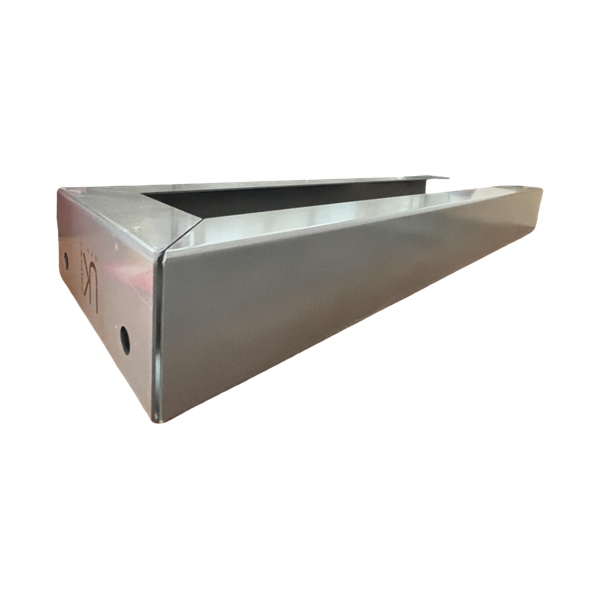
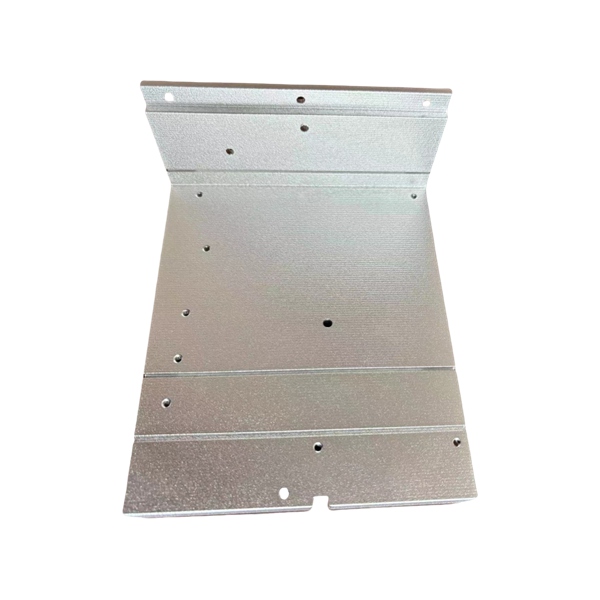
The welding and sheet metal fabrication process begins with material selection and cutting. Sheet stock in carbon steel, stainless steel, aluminum, or galvanized steel is received in standard 4×8, 4×10, or 5×10 foot sheets, inspected for thickness tolerance and surface defects, then cut into part blanks. Modern welding and sheet metal fabrication shops use fiber laser cutting for most materials — the process delivers positional accuracy of ±0.003 to ±0.005 inches and produces a narrow kerf with minimal heat-affected zone, which matters because cut edge quality directly affects weld joint preparation downstream.
How Cutting Quality Affects Downstream Welding
The cut edge produced in the cutting stage becomes the weld preparation surface in the joining stage. A laser-cut edge with excessive dross, taper, or surface oxidation requires grinding before welding — adding labor time and producing inconsistent joint geometry that affects weld penetration. Welding and sheet metal fabrication suppliers who optimize cutting parameters for weld prep — nitrogen assist gas on stainless and aluminum to produce oxide-free edges, controlled cutting speed to minimize dross — reduce total fabrication time by eliminating grinding steps and produce more consistent weld joints.
Stage Two: CNC Bending and Forming
After cutting, the part blanks move to CNC press brake bending, where they are formed into three-dimensional geometry — flanges, channels, angles, and boxes. In welding and sheet metal fabrication, the bending stage must produce dimensions that allow proper weld joint fit-up. If a flange angle is off by 2 degrees due to uncompensated springback, the resulting gap between mating parts may be too wide for the specified weld process, requiring the welder to add excessive filler material — which increases distortion and reduces weld quality. A welding and sheet metal fabrication shop that controls bend angle to ±0.5 degrees produces weld joints with consistent gap and better penetration.
Joint Preparation for Welding in Sheet Metal Fabrication
For welding and sheet metal fabrication of thicker materials (above 0.187 inch), the joint edge may require beveling or grooving to achieve full penetration welds. This preparation is done either on the laser cutter — by programming a bevel cut angle into the cutting path — or with a dedicated edge prep machine after cutting. For thinner sheet (below 0.125 inch), square-edged butt joints and lap joints are standard, and no bevel preparation is needed. The welding and sheet metal fabrication engineer specifies the joint geometry based on the material thickness, weld process, and required penetration depth.
Stage Three: Fixture and Assembly Setup
Before welding begins, the formed parts must be held in correct relative position — a step called fixturing or tack assembly. In welding and sheet metal fabrication, the fixture determines whether the final welded assembly meets dimensional tolerance. A poorly designed fixture allows parts to shift during welding, producing cumulative dimensional error that exceeds the assembly tolerance. Professional welding and sheet metal fabrication suppliers design dedicated welding fixtures for each assembly — locating pins for hole alignment, clamps for flange positioning, and copper backup bars for heat sinking at weld joints to prevent distortion.
Tack Welding Strategy in Welding and Sheet Metal Fabrication
Tack welds — small spot welds placed at intervals along the joint before the final weld pass — hold the parts in position during the production weld. In welding and sheet metal fabrication, tack weld placement and sequence matter: tacking one end of a long joint first causes thermal expansion to push the far end out of alignment. An experienced welding and sheet metal fabrication welder tacks in a staggered pattern — alternating sides and working from the center outward — to distribute thermal stress and maintain joint alignment across the full length of the assembly.
Stage Four: Welding Process Selection and Execution
The welding process used in welding and sheet metal fabrication depends on the material, thickness, and quality requirements. TIG (GTAW) welding produces the highest quality weld on stainless steel and aluminum — clean, spatter-free, with precise control of heat input — but it is slow and requires a skilled welder. MIG (GMAW) welding is faster and suited to carbon steel welding and sheet metal fabrication on thicker materials, but it produces more spatter and requires more post-weld cleanup. Resistance spot welding is used in welding and sheet metal fabrication for overlapping sheet joints in auto body and enclosure applications where the weld does not need to be continuous or cosmetically finished.
Heat Input Control in Welding and Sheet Metal Fabrication
Heat input — the energy delivered per unit length of weld — determines the width of the heat-affected zone and the magnitude of distortion in welding and sheet metal fabrication. Excessive heat input warps thin sheet, produces a large heat-affected zone that weakens the material, and in stainless steel causes sensitization that destroys corrosion resistance. Welding and sheet metal fabrication shops that control heat input through pulsed welding current, travel speed management, and interpass temperature monitoring produce welded assemblies with less distortion and better mechanical properties than shops that weld at default parameters without process control.
Stage Five: Post-Weld Processing and Finishing
After welding, the welding and sheet metal fabrication assembly moves to post-weld processing. This stage includes weld grinding and blending — removing weld spatter, grinding the weld bead flush with the surface for cosmetic or structural reasons — and straightening or stress relief if welding distortion has exceeded dimensional tolerance. For stainless steel welding and sheet metal fabrication, post-weld passivation per ASTM A967 restores the chromium oxide passive film that was disrupted by welding heat. Surface finishing — powder coating, anodizing, painting — is applied after all welding and grinding is complete.
Distortion Correction in Welding and Sheet Metal Fabrication
Welding distortion in welding and sheet metal fabrication — the bending or twisting of the assembly caused by uneven thermal expansion and contraction — is corrected by flame straightening (applying localized heat to shrink specific areas) or mechanical pressing. Flame straightening requires experience: applying heat to the wrong area worsens the distortion, and overheating can affect material properties. A welding and sheet metal fabrication shop with distortion control capability can rescue assemblies that would otherwise be scrapped — but the best approach is preventing distortion through weld sequence planning and fixture design, not correcting it after the fact.
Stage Six: Final Inspection and Quality Documentation
The final stage in welding and sheet metal fabrication is inspection. Dimensional inspection verifies that the welded assembly meets the drawing tolerances — with particular attention to the cumulative tolerance stack from individual part dimensions through welding distortion. Visual weld inspection per AWS D1.1 (for steel) or AWS D1.2 (for aluminum) or AWS D1.6 (for stainless steel) checks for surface defects: porosity, undercut, incomplete fusion, and excessive reinforcement. For critical welding and sheet metal fabrication applications, additional non-destructive testing — dye penetrant testing, magnetic particle testing, or radiographic inspection — may be required based on the engineering specification.
Documentation Requirements for Welding and Sheet Metal Fabrication
B2B buyers sourcing welding and sheet metal fabrication assemblies for regulated industries — pressure vessels, structural systems, medical equipment — should require documentation including welding procedure specifications (WPS), welder performance qualifications (WPQ), material test reports with heat number traceability, and final dimensional inspection reports. A welding and sheet metal fabrication supplier with ISO 9001 quality system certification maintains these records as part of their standard quality process. For welding and sheet metal fabrication going into structural applications governed by building codes, third-party inspection and code compliance documentation may also be required.
Common Quality Problems and Prevention
The most frequent quality issues in welding and sheet metal fabrication — distortion, porosity, incomplete fusion, and dimensional non-conformance — share a common root cause: insufficient process control at the interface between cutting, forming, and welding. A welding and sheet metal fabrication supplier that treats these stages as independent operations produces parts that individually meet spec but fail in assembly. A supplier that engineers the full welding and sheet metal fabrication workflow — optimizing cutting for weld prep, controlling bending for joint fit-up, designing fixtures for thermal management, and documenting welding parameters — produces assemblies that meet dimensional and structural requirements consistently.
Conclusion
Welding and sheet metal fabrication is an integrated manufacturing process where cutting quality, bending accuracy, fixture design, welding parameter control, and post-weld inspection each contribute to the final assembly quality. B2B buyers evaluating welding and sheet metal fabrication suppliers should look beyond individual process capabilities and assess the supplier's ability to manage the interfaces between stages — because that is where quality is won or lost. A supplier with laser cutting, CNC bending, certified welding, and quality system documentation under one roof — like an ISO 9001 certified welding and sheet metal fabrication manufacturer — provides the process integration that produces welded assemblies meeting structural, dimensional, and regulatory requirements. When sourcing welding and sheet metal fabrication for your next project, request a process walkthrough, review welding procedure specifications, and ask for dimensional data from comparable previous assemblies to verify that the supplier's integrated process delivers what your application demands.
FAQ
What welding process is best for sheet metal fabrication?
TIG (GTAW) welding is preferred for welding and sheet metal fabrication in stainless steel and aluminum below 0.125 inch, producing clean welds with minimal heat input. MIG (GMAW) is more efficient for carbon steel and thicker materials where deposition rate matters more than cosmetic finish.
How is welding distortion minimized in sheet metal fabrication?
Distortion in welding and sheet metal fabrication is minimized through fixture design, staggered tack welding sequence, controlled heat input via pulsed current, and welding sequence planning that moves from the center outward to distribute thermal stress.
What documentation should a welding and sheet metal fabrication supplier provide?
A qualified welding and sheet metal fabrication supplier provides WPS, welder performance qualifications, material test reports with heat traceability, final dimensional inspection reports, and AWS D1.1/D1.2/D1.6 visual weld inspection records.
Can a sheet metal fabrication shop handle both cutting and welding?
Yes. An integrated welding and sheet metal fabrication shop with laser cutting, CNC bending, and certified welding under one roof manages the full process — eliminating the coordination risk of outsourcing welding to a separate subcontractor.
What is the typical lead time for welded sheet metal assemblies?
Standard welding and sheet metal fabrication lead time ranges from 2 to 4 weeks for simple assemblies and 4 to 8 weeks for complex multi-part welded structures requiring custom fixtures and multiple welding processes.
References
1. AWS D1.1/D1.1M:2020, "Structural Welding Code—Steel," American Welding Society, Miami, 2020.
2. AWS D1.6/D1.6M:2017, "Structural Welding Code—Stainless Steel," American Welding Society, Miami, 2017.
3. ASTM A967/A967M-17, "Standard Specification for Chemical Passivation Treatments for Stainless Steel Parts," ASTM International, West Conshohocken, 2017.
4. Kalpakjian, S. and Schmid, S.R., "Manufacturing Engineering and Technology," 7th Edition, Pearson, Upper Saddle River, 2017.