

In high-volume precision manufacturing, CNC turning services are the workhorse of rotational part production. Whether producing shafts, bushings, connectors, or bearing housings, industrial buyers need a clear technical understanding of what CNC turning services actually deliver, how tolerances are achieved, which materials perform best, and how to qualify a turning service provider for demanding applications. This article explains CNC turning services from a manufacturing engineering perspective, giving procurement engineers and technical buyers the knowledge to make informed sourcing decisions.
What CNC Turning Services Actually Do: Process Fundamentals
CNC turning services remove material from a rotating cylindrical workpiece using stationary cutting tools fed linearly against the spinning part. The process produces round, tapered, contoured, and threaded external features while internal features—bores, ID threads, and countersinks—are machined using bar feed through the spindle on turret lathes. Modern CNC turning services operate multi-axis turning centers with live tooling capability, Y-axis interpolation, and sub-spindles that machine parts completely in a single clamping setup, eliminating the repositioning errors that plague two-station manual turning operations.
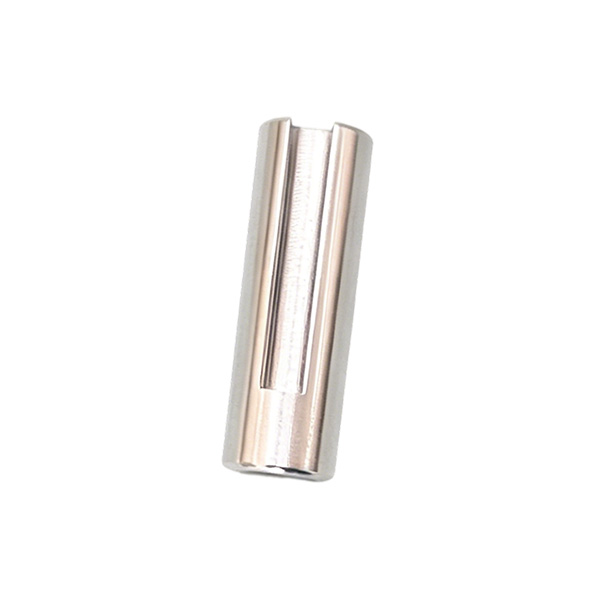
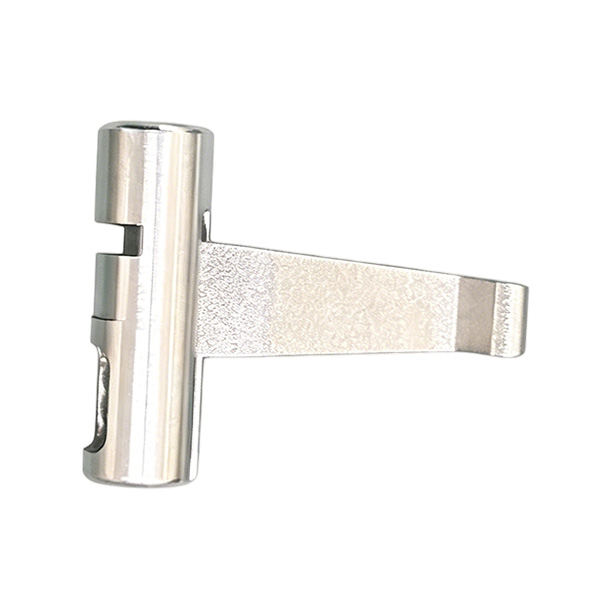
Chuck-Type Versus Bar-Feed Turning Services
CNC turning services divide into two primary production modes based on workpiece supply. Chuck-type turning services grip raw castings, forgings, or investment cast blanks in a jaw chuck and machine the exterior and internal features before part ejection. Bar-feed CNC turning services push continuous bar stock through the spindle, machine the part profile, and cut off the finished part at the end of each cycle. Bar-feed turning services are the preferred method for high-volume CNC turning services production of small precision components from 0.125 to 2.000 inches in diameter, where cycle times below 30 seconds per piece are economically essential.
Swiss-Type Turning Services for Small-Diameter Precision Parts
For CNC turning services on parts below 0.750 inches diameter with length-to-diameter ratios exceeding 3:1, Swiss-type CNC turning centers are the process of choice. Swiss-type CNC turning services use a guide bushing that supports the bar stock immediately adjacent to the cutting zone, preventing deflection under cutting forces that would cause oversized dimensions on conventional sliding-headstock lathes. Swiss-type CNC turning services routinely hold positional tolerances of ±0.0005 inches on turned features while maintaining concentricity of ±0.001 inches between features, making this capability essential for medical device components, aerospace hydraulic fittings, and precision electronics hardware.
Tolerance Capabilities in CNC Turning Services
The tolerance capability of CNC turning services varies significantly with machine tool class, part geometry, and material. Standard CNC turning services on CNC center lathes achieve diameter tolerances of ±0.001 to ±0.003 inches on workpieces up to 12 inches in diameter. Precision CNC turning services on high-accuracy turning centers with linear encoders and thermal compensation systems achieve ±0.0005 to ±0.001 inches routinely, with优良 service providers maintaining ±0.0002 inches on critical dimensions using in-process gauging and adaptive cutting compensation.
Thread Machining Standards in CNC Turning Services
Threaded features produced by CNC turning services are governed by ASME B1.1 (unified inch threads) and ASME B1.13M (metric threads). CNC turning services with thread inspection capability using laser thread gauges or optical thread comparators verify thread pitch diameter to ±0.001 inches, meeting Class 3 thread fit requirements for commercial applications. Aerospace-grade CNC turning services require Class 6H/6g fit verification using thread plug and ring gauges with current calibration certificates traceable to NIST, demonstrating full compliance with the thread quality requirements specified in the engineering drawing.
Surface Finish Performance in CNC Turning Services
CNC turning services routinely produce surface finishes ranging from Ra 63 to Ra 250 µin (1.6 to 6.3 µm) in as-turned condition, depending on tool material, insert geometry, and cutting parameters. Ra 32 µin (0.8 µm) is achievable with standard carbide inserts and optimized feeds on most engineering metals. Ra 16 µin (0.4 µm) requires polished inserts or diamond-turned inserts with fine feed rates below 0.004 ipr. Ra 8 µin (0.2 µm) and finer in CNC turning services requires single-crystal diamond tooling, cryogenic machining, or a dedicated grinding operation following the turning stage.
Material Options for CNC Turning Services
CNC turning services support a broad range of engineering materials, each requiring specific tooling, parameter, and coolant strategies to achieve optimal results. The three most commonly machined material families in CNC turning services are carbon and alloy steels, stainless steels, and non-ferrous alloys, with specialty CNC turning services also handling high-temperature superalloys, titanium, and engineered polymers.
Free-Machining Steels Versus Conventional Steels
Free-machining steel grades—1215, 1117, 1144—are optimized for high-speed CNC turning services, enabling cutting speeds 30 to 50 percent higher than equivalent conventional steel grades due to sulfur or lead additions that act as internal chip breakers. For high-volume CNC turning services on non-critical components where surface finish and dimensional consistency matter more than ultimate strength, free-machining steels reduce cycle time and tool cost significantly. For structural applications requiring maximum strength, conventional AISI 1045 and 4140 alloy steels are specified in CNC turning services, with adjusted cutting parameters to accommodate the higher cutting forces and tool wear rates of these materials.
Stainless Steel and Exotic Alloy Turning Services
Austenitic stainless steel CNC turning services—particularly 303 and 316L grades—require lower cutting speeds (150 to 300 SFM versus 300 to 600 SFM for carbon steel) to prevent work hardening and built-up edge formation. CNC turning services for titanium and Inconel demand ceramic or carbide inserts with specialized geometries, cutting speeds below 100 SFM, and high-pressure coolant systems to achieve acceptable tool life. Buyers specifying CNC turning services for exotic alloys should confirm that the provider has documented process parameters and proven tool life data for the specific material and grade being quoted.
Qualifying a CNC Turning Services Provider
Vendor qualification for CNC turning services follows a structured technical evaluation of the provider's equipment fleet, quality management system, and process capability data. Request the supplier's ISO 9001 or AS9100 certificate, machine tool accuracy test reports, and first article inspection data from a recent job with similar geometry and tolerance requirements. Conduct a process capability study (Cpk) analysis on the three most critical dimensions of the proposed part: CNC turning services providers with Cpk values above 1.33 on critical characteristics demonstrate statistical process control capable of maintaining tolerances without inspection of every part.
First Article Inspection and Lot Traceability
Every CNC turning services engagement should include a first article inspection per AS9102 or customer-specified requirements. The first article inspection report must document dimensional measurements on all drawing dimensions, identify the measurement equipment with calibration status, and include material test reports confirming the raw material chemistry matches the specification. For regulated industries—medical devices, aerospace, nuclear—CNC turning services providers must maintain lot traceability from raw material heat numbers through finished part serial numbers, with device history records retained for a minimum of 10 years.
Conclusion
CNC turning services explained for industrial applications reveals a manufacturing capability with wide performance boundaries. Standard CNC turning services produce parts to ±0.001 to ±0.003 inches at economical cycle times, while precision and Swiss-type CNC turning services achieve ±0.0005 inches and finer on complex geometries at higher per-part cost. Material selection, thread standards, surface finish requirements, and quality management system certification collectively determine whether a CNC turning services provider is qualified for a specific application. Buyers who invest the time to qualify CNC turning services providers against documented process data—not price alone—consistently achieve lower total cost through reduced scrap, fewer quality disputes, and more predictable delivery performance.
Frequently Asked Questions
What diameter range can CNC turning services handle?
Standard CNC turning services on conventional chucking lathes handle diameters from 0.250 inches to 24.0 inches. Swiss-type CNC turning services handle diameters from 0.020 to 0.750 inches with length-to-diameter ratios up to 20:1.
What is the typical lead time for CNC turning services quotes?
Production CNC turning services quotes require 3 to 7 business days depending on part complexity and the provider's quoting capacity. Prototype and first article CNC turning services typically quote within 24 to 48 hours.
Can CNC turning services produce both external and internal features in one setup?
Yes. Multi-axis CNC turning services with live tooling capability machine external diameters, bores, cross-drilled holes, flats, slots, and threads in a single clamping setup, maintaining tight concentricity between all features.
How do I verify the quality of CNC turning services output?
Request a first article inspection report per AS9102, Cpk data on critical dimensions from production runs, and material test reports confirming raw material compliance with the specified grade.
References
1. ASME B1.1-2018, "Unified Inch Screw Threads (UN and UNR Thread Form)," American Society of Mechanical Engineers, New York, 2018.
2. ASME B46.1-2009, "Surface Texture (Surface Roughness, Waviness, and Lay)," American Society of Mechanical Engineers, New York, 2009.
3. ASM Handbook Volume 16: "Machining," ASM International, Materials Park, 1989. (I等N: 978-0871700962)
4. Trent, E.M. and Wright, P.K., "Metal Cutting," 4th Edition, Butterworth-Heinemann, Boston, 2000. (I等N: 978-0750670693)
5. ISO 9001:2015, "Quality Management Systems—Requirements," International Organization for Standardization, Geneva, 2015.