

The battery system is the most structurally demanding and thermally critical subsystem in an electric vehicle—and custom automotive brackets for EV battery systems bear the mechanical consequences of that demand. Battery pack enclosures, module retention brackets, busbar mounting frames, thermal management plate assemblies, and crash-structural cross members must be designed as a coordinated system that manages structural loads, thermal expansion differentials, vibration isolation, and crash energy absorption simultaneously. This article explains custom automotive brackets for EV battery systems from an engineering design and procurement perspective, covering the structural requirements, manufacturing methods, material selection, and qualification criteria that define a successful EV battery bracket program.
Structural Requirements for Custom Automotive Brackets in EV Battery Packs
EV battery packs experience structural loads that differ fundamentally from those in internal combustion engine vehicle frames. The battery pack in an EV is both a structural member and an energy storage vessel—a dual function that creates competing requirements for custom automotive brackets. The pack must resist crash-induced chassis deflection that could penetrate the enclosure and damage cells, while simultaneously managing the thermal expansion of cells that occurs during charging and high-rate discharging cycles. Custom automotive brackets for EV battery systems must address both requirements without compromise.
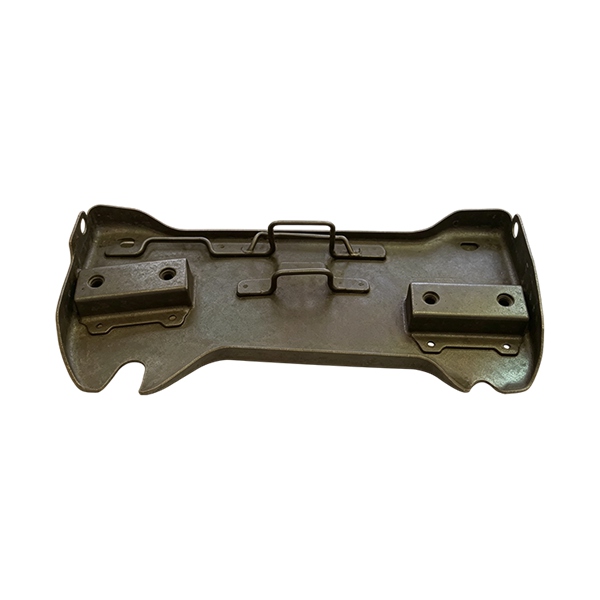
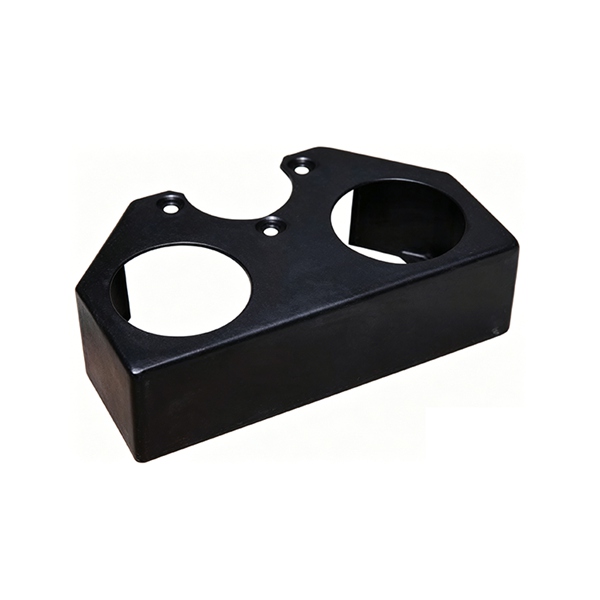
Crash Safety and Structural Load Requirements
Custom automotive brackets in EV battery pack applications are classified as structural safety components under FMVSS 305 (Federal Motor Vehicle Safety Standard 305—Electric-Powered Vehicles: Battery Electric Vehicles), which establishes requirements for retention of the battery pack during frontal, side, and rear crash scenarios. Custom automotive brackets specified as crash-structural members must maintain pack integrity and prevent cell penetration under loads that can exceed 50 kN in a full-width frontal impact. This requirement drives custom automotive brackets toward high-strength materials—aluminum extrusions, high-pressure die castings, or stamped AHSS—with geometries optimized for energy absorption through controlled plastic deformation rather than purely elastic load resistance.
Vibration and Fatigue Requirements for Custom Automotive Brackets
EV battery packs mounted to vehicle subframes experience continuous vibration loading from road surface input and electric motor torque reaction. Custom automotive brackets must be qualified to survive vibration fatigue testing per SAE J2380 (Vehicle Vibration Fatigue) protocols, demonstrating no crack initiation or structural failure after 480 hours of random vibration loading across the 5 Hz to 200 Hz frequency range at 1.5 times the specified vibration dose value. The fatigue performance of custom automotive brackets is highly sensitive to weld quality at all joining locations, surface finish at stress concentration features (holes, notches, radius transitions), and the bolt preload relaxation rate in fastener-attached joints.
Manufacturing Methods for Custom Automotive Brackets: Casting, Extrusion, and Stamping
Custom automotive brackets for EV battery systems are produced by three primary manufacturing methods—aluminum high-pressure die casting (HPDC), aluminum extrusion with CNC machining, and aluminum or steel stamping—each with distinct cost, weight, strength, and geometric tradeoffs that determine suitability for specific bracket applications.
Aluminum Die Casting for Complex Custom Automotive Brackets
High-pressure die casting (HPDC) is the dominant manufacturing method for custom automotive brackets in EV battery packs where the bracket geometry is complex, requires internal passages for coolant routing, or needs multiple fastener bosses and mounting flanges in a single integrated component. HPDC custom automotive brackets in A356 or A380 aluminum achieve yield strengths of 160 to 180 MPa with excellent dimensional accuracy (±0.001 to ±0.003 inches per inch) as-cast, reducing or eliminating CNC machining requirements on mounting surfaces. The integration capability of HPDC enables custom automotive brackets that combine structural mounting, thermal management channels, and electrical ground contact surfaces in a single cast component—manufacturing consolidation that reduces the total bracket count in a battery pack assembly from 15 to 20 individual pieces to 4 to 6 cast components.
Aluminum Extrusion for Beam-Style Custom Automotive Brackets
Custom automotive brackets with predominantly beam-shaped or tubular geometries—cross-beam supports, side rail brackets, and longitudinal frame members—are economically produced by aluminum extrusion. Extruded aluminum custom automotive brackets in 6063-T6 or 6061-T6 alloys offer excellent strength-to-weight ratio, good corrosion resistance, and the ability to create complex hollow cross-sections that provide maximum bending stiffness with minimum material weight. Extruded custom automotive brackets require CNC machining at all fastener and interface locations, but the combination of extrusion plus machining delivers lower tooling cost than die casting for moderate production volumes below 100,000 pieces per year.
Progressive Die Stamping for High-Volume Custom Automotive Brackets
Custom automotive brackets at production volumes above 250,000 pieces per year—typical for high-volume EV platforms—may justify progressive die stamping tooling investment. Stamped custom automotive brackets in aluminum 5182-O or 6022-T4 alloys deliver excellent combination of strength, ductility, and surface quality for body-in-white bracket applications. Steel custom automotive brackets in DP590 or DP780 dual-phase AHSS provide higher yield strength than aluminum at lower material cost, though with increased weight. The progressive die tooling investment for stamped custom automotive brackets ranges from $150,000 to $600,000 depending on complexity, requiring annual volumes above 200,000 pieces to amortize the tooling investment economically.
Thermal Management Integration in Custom Automotive Brackets
Thermal management in EV battery systems places specific requirements on custom automotive brackets that are unique to electrified vehicles. Battery cells generate heat during high-rate charging and discharging cycles, and that heat must be transferred away from the cell array through thermal interface materials (TIMs), cold plates, and custom automotive brackets that function as structural members and thermal pathways simultaneously.
Custom Automotive Brackets with Integrated Cooling Channels
Custom automotive brackets in die-cast aluminum can incorporate internal cooling channels that route coolant fluid directly through the bracket body, creating a structural-thermal hybrid component that eliminates the weight and interface complexity of a separate cooling plate. HPDC custom automotive brackets with integrated cooling channels require careful design of the die split line and cooling channel routing to maintain structural integrity while achieving the target thermal performance. The thermal resistance of a die-cast custom automotive bracket with integrated cooling channels is typically 0.05 to 0.15 °C-in/W—sufficient to manage continuous heat dissipation from battery modules at power densities up to 2,500 W/L without supplemental active cooling.
Material Selection and Corrosion Resistance for Custom Automotive Brackets
Custom automotive brackets in EV battery applications are exposed to the internal environment of the battery pack, which may include condensation, coolant leakage, and outgassing from polymeric components. Material selection for custom automotive brackets must account for galvanic corrosion potential when dissimilar metals are joined (aluminum brackets in contact with steel fasteners), the corrosive effect of coolant fluids on aluminum surfaces, and the cosmetic corrosion requirements under automotive warranty coverage periods of 8 to 10 years.
Surface Treatment and Coating for Custom Automotive Brackets
Custom automotive brackets require surface treatment to achieve the corrosion resistance required for the vehicle warranty period. Die-cast and extruded aluminum custom automotive brackets receive chromate conversion coating (Alodine or Chromicoat) or chrome-free conversion coating per ASTM B136, followed by electrocoat (e-coat) primer that provides uniform corrosion protection across complex geometries including internal passages and blind features inaccessible to spray coating. Stamped steel custom automotive brackets are typically supplied with zinc electroplating per ASTM B633 or hot-dip galvanizing per ASTM A123, followed by e-coat primer to achieve the required corrosion resistance in the battery pack environment.
Conclusion
Custom automotive brackets for EV battery systems are engineered components with structural, thermal, and corrosion requirements that demand a systematic design and manufacturing approach. The choice between die casting, extrusion, and stamping for custom automotive brackets follows from production volume, geometric complexity, and structural requirements—each method has a defined optimal application domain. Material selection, thermal management integration, and surface treatment specification must be coordinated during the bracket design phase rather than addressed sequentially, as each decision constrains the options available in the others. EV manufacturers and Tier 1 suppliers who invest in rigorous qualification of custom automotive brackets design and manufacturing achieve battery pack assembly quality and durability that supports vehicle warranty confidence in one of the most mechanically challenging environments in modern vehicle architecture.
Frequently Asked Questions
What materials are used for custom automotive brackets in EV battery systems?
Custom automotive brackets for EV battery applications use aluminum alloys (A356 HPDC, 6061/6063 extrusion, 5182/6022 stamping), high-strength steel (DP590, DP780 AHSS), and occasionally magnesium die castings where weight reduction is the primary driver.
How are custom automotive brackets qualified for EV crash safety requirements?
Custom automotive brackets are qualified through FMVSS 305 crash retention testing, SAE J2380 vibration fatigue testing, and accelerated thermal cycling testing that simulates 10 years of operational temperature exposure in a compressed timeframe.
Can custom automotive brackets integrate thermal management functions?
Yes. HPDC custom automotive brackets with integrated cooling channels provide combined structural support and liquid cooling thermal management, eliminating the need for a separate cooling plate in battery pack designs.
What is the typical tooling lead time for custom automotive brackets in EV production?
Die casting tooling for custom automotive brackets requires 16 to 24 weeks for design, manufacturing, and tryout. Progressive die tooling requires 12 to 18 weeks. Extrusion dies typically require 6 to 10 weeks.
References
1. FMVSS 305, "Electric-Powered Vehicles: Battery Electric Vehicles," Code of Federal Regulations, Title 49, Section 571.305, National Highway Traffic Safety Administration, Washington, 2023.
2. SAE J2380-2021, "Vehicle Vibration Fatigue Testing," SAE International, Warrendale, 2021.
3. IATF 16949:2016, "Quality Management System Requirements for Automotive Production," International Automotive Task Force, 2016.
4. ASTM B85/B85M-18, "Standard Specification for Aluminum-Alloy Die Castings," ASTM International, West Conshohocken, 2018.
5. Kalpakjian, S. and Schmid, S.R., "Manufacturing Engineering and Technology," 7th Edition, Pearson, Upper Saddle River, 2017.