

Custom Metal Stamping vs CNC Machining: Key Differences
Both custom metal stamping and CNC machining are widely used in industrial manufacturing, but they serve different production purposes depending on component complexity, production volume, material requirements, and dimensional tolerance expectations.
Understanding the differences between these manufacturing methods helps engineers and buyers select the most efficient production solution.
Understanding Custom Metal Stamping
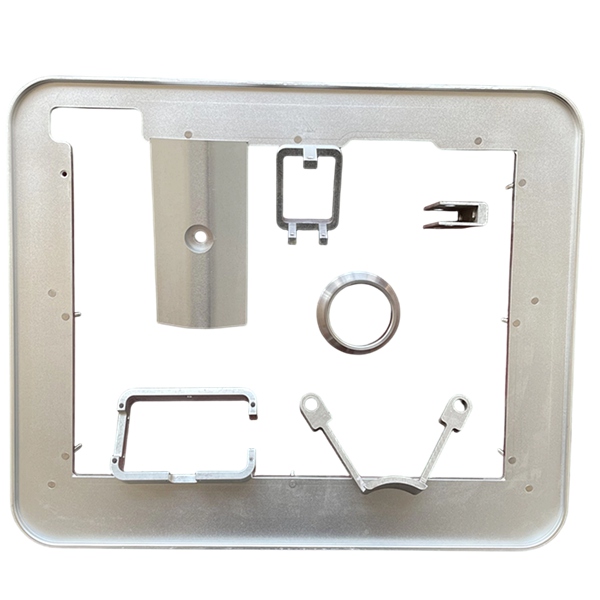
Custom metal stamping is a forming process where sheet metal is shaped using dies and mechanical presses.
The process is highly suitable for:
High-volume production
Thin sheet metal components
Repetitive manufacturing
Cost-sensitive OEM applications
Stamping technology is commonly used for brackets, connectors, automotive parts, and electronic housings.
What Is CNC Machining
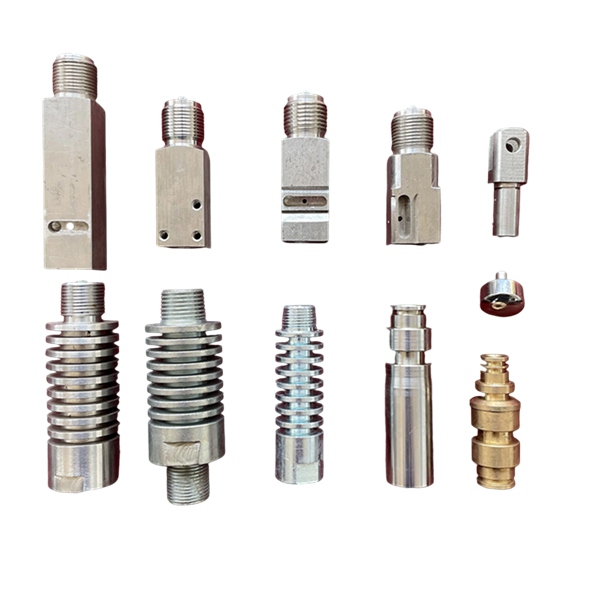
CNC machining is a subtractive manufacturing process where computer-controlled cutting tools remove material from solid metal blocks or bars.
Common CNC operations include:
Milling
Turning
Drilling
Tapping
Grinding
CNC machining is ideal for complex geometries and low-to-medium production quantities.
Production Efficiency Comparison
For mass production, custom metal stamping typically offers significantly faster production speed compared with CNC machining.
Once tooling is completed, stamping systems can produce thousands of identical components rapidly with minimal operator intervention.
CNC machining generally requires longer cycle times for each individual component.
Dimensional Precision and Complexity
CNC machining provides excellent flexibility for producing complex 3D geometries and intricate dimensional features.
In contrast, custom metal stamping is better suited for flat or moderately formed components with repeatable dimensions.
The optimal process depends on component design complexity and tolerance requirements.
Material Utilization and Waste Reduction
Metal stamping generally produces less material waste during high-volume production because the process is optimized around sheet nesting and die efficiency.
CNC machining removes excess material during cutting operations, which may increase scrap rates depending on part geometry.
Cost Considerations for OEM Manufacturing
Although tooling investment for custom metal stamping can be substantial initially, the per-unit manufacturing cost becomes very low during mass production.
CNC machining usually has lower startup cost but higher per-unit production expenses.
This makes stamping more economical for large-volume manufacturing.
Best Applications for Each Process
Custom metal stamping is commonly used for:
Automotive brackets
Electrical terminals
Sheet metal housings
Appliance components
CNC machining is preferred for:
Precision mechanical parts
Aerospace components
Complex industrial assemblies
Prototype manufacturing
Selecting the Right Manufacturing Method
Choosing between stamping and CNC machining depends on:
Production volume
Part complexity
Material thickness
Budget considerations
Lead time requirements
Many manufacturers combine both technologies within integrated production systems.
Conclusion
Both custom metal stamping and CNC machining provide essential manufacturing advantages for modern industrial production. Understanding their differences allows manufacturers to optimize production efficiency, product quality, and operational cost control.
References
Groover, M.P., Fundamentals of Modern Manufacturing
Journal of Manufacturing Processes
CIRP Annals – Manufacturing Technology
ASM Handbook – Machining and Forming Technologies