

When industrial fabricators need to cut sheet metal, they face a fundamental process choice: laser cutting sheet metal services or plasma cutting. Both thermal separation processes sever metal by melting or vaporizing the material along a programmed path, but the physics of each method produces markedly different outcomes in cut quality, dimensional accuracy, heat-affected zone depth, and cost structure. Understanding these differences enables purchasing engineers and production planners to specify the correct cutting process for their application rather than defaulting to whichever service is readily available.
Laser Cutting Sheet Metal Services: Process Fundamentals
Laser cutting sheet metal services use a focused beam of coherent, monochromatic light to heat and vaporize metal along a precise linear path. The cutting head directs a laser beam with beam quality measured in M² values below 1.5 for fiber lasers, producing a focused spot diameter of 0.001 to 0.005 inches depending on the optic configuration. The intense energy concentration at the focused spot melts metal almost instantaneously while a coaxial assist gas jet ejects the molten material from the kerf, producing a narrow, precise cut with minimal heat input into the surrounding material.
Accuracy and Edge Quality Advantages
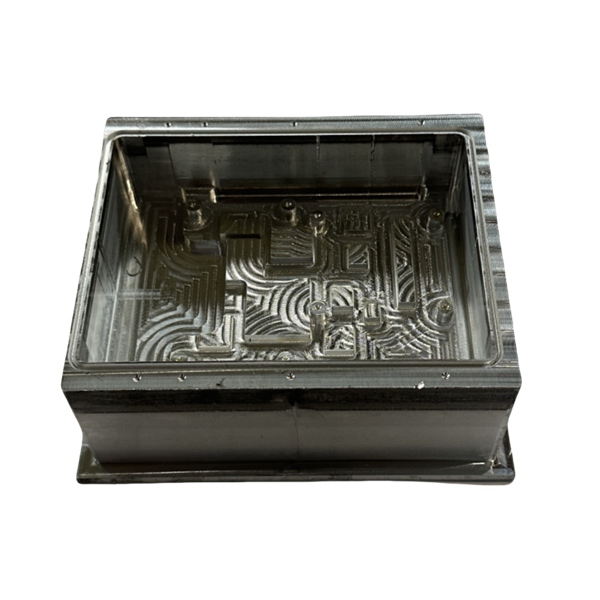
Laser cutting sheet metal services achieve positional accuracy of ±0.001 to ±0.003 inches and repeatability of ±0.001 inches on CNC-controlled cutting platforms, making them the preferred choice for parts requiring tight dimensional tolerances. The narrow kerf width—0.004 to 0.015 inches depending on material thickness—reduces material waste by 5 to 15 percent compared to plasma cutting on equivalent geometries. Edge quality from laser cutting sheet metal services is superior to plasma cutting, producing clean, dross-free edges with minimal heat-affected zone on materials up to 0.500 inches thick. For precision sheet metal fabrications requiring as-cut edges without secondary machining, laser cutting sheet metal services are the clear process choice.
Material Thickness Range and Speed Tradeoffs
CO2 and fiber laser cutting sheet metal services operate effectively across material thicknesses from 0.005 inches foil to 1.000 inch plate, with the highest accuracy and edge quality achieved in the 0.010 to 0.250 inch range. Above 0.500 inch thickness, laser cutting speeds decrease sharply and the heat-affected zone becomes more pronounced, particularly in stainless steel and aluminum. Nitrogen assist gas cutting in laser cutting sheet metal services produces oxide-free, pristine edges suitable for cosmetic and post-weld applications, though at a premium gas cost per cut.
Plasma Cutting: Process Capabilities and Limitations
Plasma cutting ionizes an inert gas—typically argon, nitrogen, or a mixture thereof—by passing it through an electric arc, creating a conductive plasma stream that melts and expels metal from the cut path. Plasma arc cutting (PAC) systems operate at arc temperatures of 20,000 to 30,000°F, enabling cutting speeds on thick plate that exceed laser cutting speeds significantly above 0.750 inch material thickness. This speed advantage makes plasma cutting economically attractive for thick plate processing where the production volume does not justify the capital cost of equivalent laser systems.
Dimensional Accuracy in Plasma Cutting
The accuracy of plasma cutting is fundamentally limited by the arc's plasma stream diameter—typically 0.030 to 0.060 inches at the workpiece surface—and by the turbulence in the gas stream that separates molten material from the cut. Plasma cut accuracy ranges from ±0.015 to ±0.030 inches on CNC-controlled systems, three to ten times less precise than laser cutting sheet metal services. The heat-affected zone in plasma cutting extends 0.015 to 0.030 inches into the base material on carbon steel and up to 0.060 inches on stainless steel, introducing the risk of intergranular attack at the cut edge in corrosion-sensitive applications.
Numerical Control and Toroidal Cutting Limitation
Plasma cutting systems that must cut at sharp corners or acute angles risk arc blowout—the tendency of the plasma arc to extinguish or deviate from the programmed path at high angle changes. Many plasma cutting systems employ torque reduction at corners to prevent this, but the resulting corner geometry remains radiused rather than sharp. Laser cutting sheet metal services are free of this limitation, cutting any corner angle with the same accuracy as linear segments. For components with sharp internal corners, laser cutting sheet metal services produce superior corner geometry without radius compensation strategies.
Application-Based Process Selection Guide
The choice between laser cutting sheet metal services and plasma cutting should follow from an analysis of the material, thickness, accuracy requirement, edge quality specification, and production volume. No single process is universally superior; each has a defined application domain where it is economically and technically optimal.
Thin Sheet: Laser Cutting Sheet Metal Services Preferred
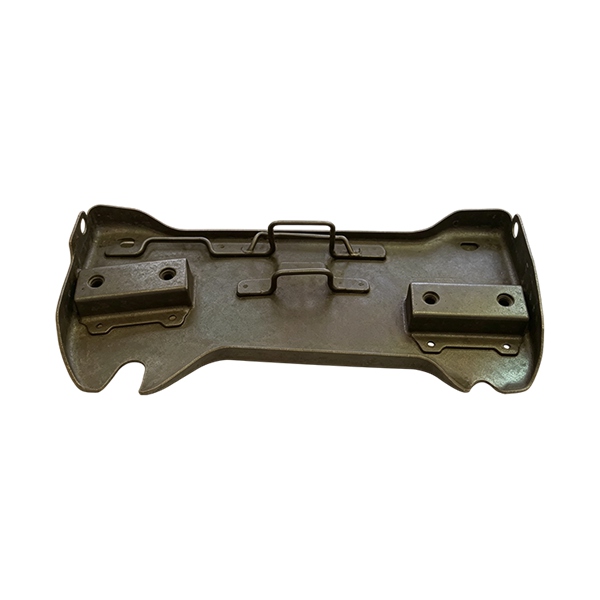
Below 0.125 inch material thickness, laser cutting sheet metal services dominate plasma cutting across all performance metrics. The narrow kerf, minimal heat-affected zone, and superior edge quality of laser cutting sheet metal services produce parts with precision that plasma cutting cannot match at any price. For sheet metal fabrications in the 0.020 to 0.125 inch range—enclosures, brackets, structural panels, and precision chassis components—laser cutting sheet metal services are the economically optimal process choice for production runs above 5 pieces.
Thick Plate: Plasma Cutting or Waterjet for Edge Quality
Above 0.750 inch material thickness, plasma cutting or waterjet cutting compete directly with laser cutting sheet metal services. Laser cutting sheet metal services on thick plate incur very long cycle times, large heat-affected zones, and dross accumulation on the cut surface. Plasma cutting on 1.000 inch carbon steel plate cuts at speeds five to ten times faster than fiber lasers at equivalent thickness. Waterjet cutting on thick plate produces the highest edge quality of any thermal or mechanical process, but at higher cost per inch and slower speeds than plasma cutting for very thick sections.
Cost Comparison: Laser Cutting Sheet Metal Services vs Plasma Cutting
Laser cutting sheet metal services carry a higher operational cost per minute than plasma cutting due to higher capital depreciation, optics replacement intervals, and gas consumption rates. However, the narrower kerf, superior accuracy, and reduced secondary machining requirements of laser cutting sheet metal services frequently produce a lower total cost per part when the full downstream processing and material waste costs are included. A proper cost comparison must account for part nesting efficiency (kerf width), secondary machining requirements (edge cleanup), and scrap rate (dimensional accuracy fallout).
Conclusion
Laser cutting sheet metal services and plasma cutting serve different segments of the sheet metal fabrication market with fundamentally different performance tradeoffs. Laser cutting sheet metal services provide the precision, edge quality, and narrow kerf that precision sheet metal fabrication demands. Plasma cutting delivers speed and economy on thick plate where laser cutting loses its accuracy and economics advantages. Buyers who understand these tradeoffs and specify the appropriate cutting process for each application optimize both part quality and total cost. The choice is not which process is better—it is which process is correct for the specific job at hand.
Frequently Asked Questions
Which is faster: laser cutting sheet metal services or plasma cutting?
Plasma cutting is faster on material above 0.750 inches thick. Below 0.500 inches, laser cutting sheet metal services are faster due to higher traverse speeds and faster cycle times on the same part geometry.
Can laser cutting sheet metal services cut reflective metals like aluminum and copper?
Fiber laser cutting sheet metal services cut aluminum and copper effectively at thicknesses below 0.250 inches. Reflective metals absorb fiber laser wavelengths more efficiently than CO2 wavelengths, making fiber lasers the preferred source for these materials.
What edge quality difference exists between laser cutting sheet metal services and plasma cutting?
Laser cutting sheet metal services produce dross-free, clean edges with minimal heat-affected zone on material up to 0.500 inches. Plasma cutting produces visible heat-affected zone, oxidation, and dross accumulation that requires secondary grinding or machining above 0.250 inches.
Which process is more cost-effective for high-volume production?
Laser cutting sheet metal services are more cost-effective for high-volume precision work below 0.250 inches, where the superior accuracy, narrow kerf, and reduced secondary machining offset the higher per-minute operational cost. Plasma cutting is more economical for thick plate processing where speed outweighs precision.
References
1. ASTM B209-2014, "Standard Specification for Aluminum and Aluminum-Alloy Sheet and Plate," ASTM International, West Conshohocken, 2014.
2. ISO 9013:2017, "Thermal Cutting—Classification and Quality Levels of Thermal Cuts," International Organization for Standardization, Geneva, 2017.
3. Powell, J., "CO2 Laser Cutting," 2nd Edition, Springer-Verlag, London, 1998.
4. Steen, W.M. and Mazumder, J., "Laser Material Processing," 4th Edition, Springer, London, 2010.
5. ASME B18.12-2012, "Glossary of Terms and Definitions for Sheet Metal Fabricators," American Society of Mechanical Engineers, New York, 2012.
6. Olsen, F., "Plasma Arc Cutting: Process Characteristics and Applications," Journal of Materials Processing Technology, Vol. 127, No. 2, 2002, pp. 155-165.